Here's what nobody tells you about hormonal birth control and pleasure
You switched birth control. Now arousal feels different, orgasms hit different, or maybe they're harder to find altogether. This is not a sign that something broke. This is your body adjusting to a new hormonal environment, and it's more common than you'd think.
The relationship between birth control and sexual pleasure is real, measurable, and rarely discussed in a way that feels useful. Your doctor might mention mood changes or headaches. They rarely say: your sensitivity map might shift, your refractory period could lengthen, or your orgasm intensity might flatten temporarily.
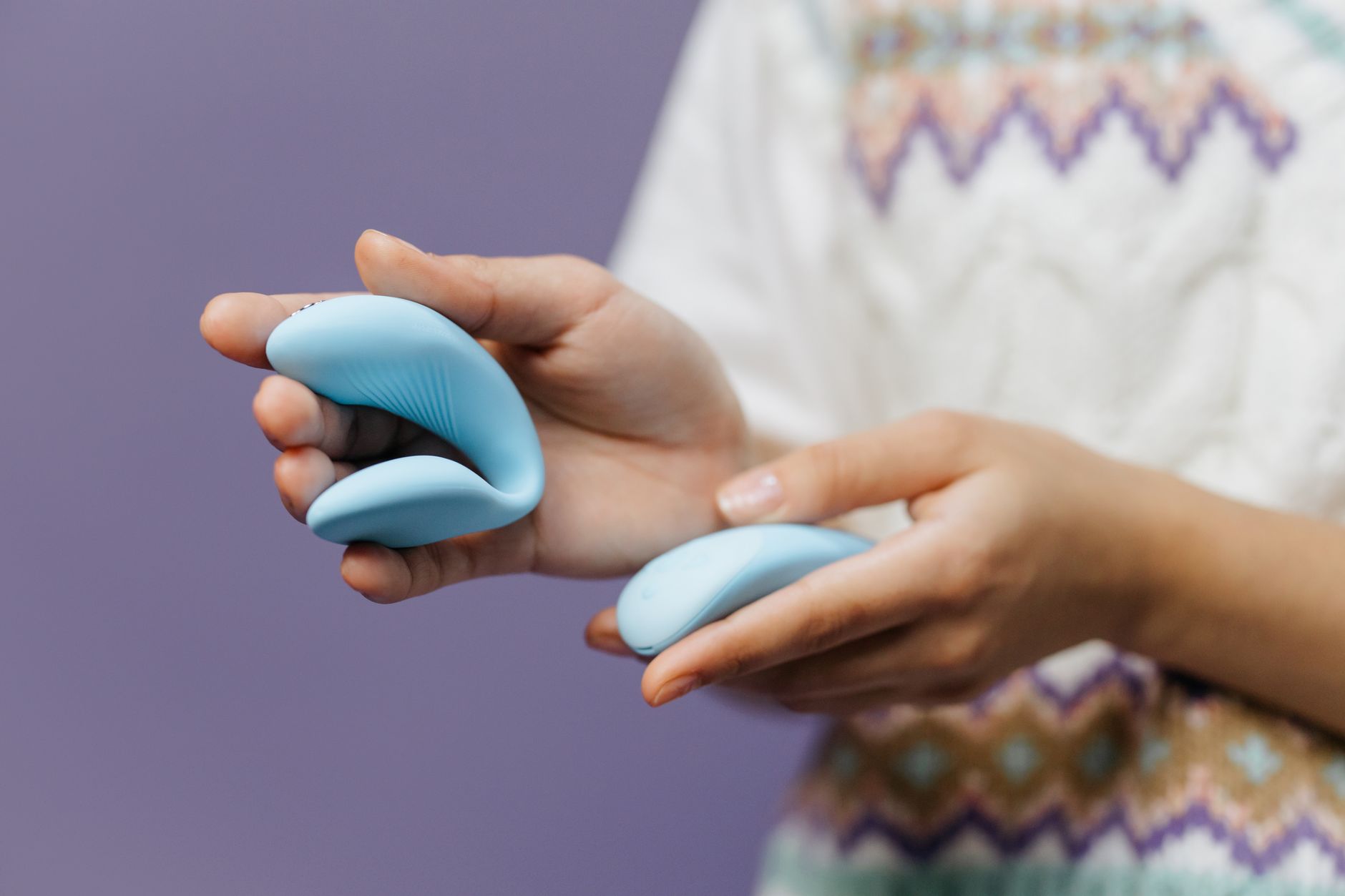
But these things happen. And they're fixable. Here's how to understand what's changing and how to use your lemon vibrator to rebuild pleasure that feels good on this new hormonal baseline.
What hormonal birth control actually does to arousal
Most hormonal birth control works by stabilizing estrogen and progestin at levels that prevent ovulation. That's the point. But here's the side effect nobody frames this way: you lose the natural rhythm that your nervous system has known since puberty.
Before birth control, your hormones cycled. High estrogen meant heightened sensitivity, faster arousal, and more intense orgasms. Lower estrogen meant a longer warm-up, but sometimes deeper, more full-body responses. Your body had rhythm. Birth control flattens that curve.
Some people love that flatness. Constant, predictable arousal. No hormonal crashes. But others find that the trade-off is a muted sexual response across the board. Progestin particularly can blunt desire and sensation. It's a progesterone mimic, and progesterone is a mellowing hormone. It's doing its job. It's just also dampening the volume on pleasure.
Add to this: many hormonal contraceptives increase sex hormone binding globulin (SHBG), a protein that binds to circulating testosterone and makes it unavailable to your tissues. Testosterone matters for desire and clitoral sensitivity in all bodies with vulvas. Lower free testosterone often means lower libido and slower arousal buildup.
None of this means you're broken. It means your nervous system is recalibrating, and your pleasure response needs different equipment or different techniques to hit the same notes.
Why your lemon clitoral vibrator might feel different
You had a favorite pattern, a favorite intensity, a way of using your lemon vibrator that worked every time. Then you started birth control, and suddenly pattern 3 feels too strong, or pattern 2 doesn't quite land, or you need twice as long to get there.
This happens because clitoral sensitivity is hormone-dependent. The tissue gets thinner, the nerve endings feel muted, and the arousal cascade that used to build quickly now takes longer to trigger. A lemon clitoral vibrator that was perfect at intensity 5 might need to drop to 3 for the first few weeks while your body adjusts.
That's not failure. That's just biology being honest.
Some people also find that after starting hormonal birth control, they need a different stimulation pattern entirely. If you were getting off on consistent high-frequency buzz, you might now need the pulsing patterns that mimic the building rhythm of arousal. The suction-based design of a lemon vibrator actually helps here because suction stimulates a broader nerve pathway than simple vibration. It's less directly intense, more contextually arousing.
The first month is not the final answer
Your body doesn't stabilize on new hormonal birth control immediately. Most people need 3 to 6 months before the brain and body fully adapt. In that window, your arousal might feel scattered, your usual turn-ons might not land, and pleasure might feel further away than it used to.
This is temporary. It's also real. The mistake people make is assuming that month-one sluggish arousal is permanent and deciding either that birth control "ruined them" or that they need to switch immediately. Sometimes you do need to switch. But often, you just need to give your nervous system time.
Here's how to navigate that adjustment period with your lemon vibrator: start lower than you think you need to. Use the lower intensity settings intentionally for the first 4-6 weeks. Think of it as re-mapping your sensitivity. What patterns used to feel good at level 4? Try them at level 2 first. Let yourself be surprised by what works now.
Mean this: don't white-knuckle it. If you're grinding hard trying to force an orgasm that isn't showing up, you're working against your own nervous system. Back off, add lubrication, slow down, and let arousal build messily. This is not the time to demand performance from your body.
Practical shifts that help immediately
Three things I recommend for anyone in the adjustment window:
Start your session earlier. If you used to need 5 minutes of warm-up, budget 15. Arousal takes longer now. That's not a bug, it's the new operating system. Building in time removes the pressure and lets your nervous system actually settle into pleasure instead of chasing it.
Layer your lemon vibrator with external context. A lemon clitoral vibrator works best when there's mental engagement. Read something that turns you on first. Think through a fantasy. Watch something that lands. Let your brain prime your body. Then use your vibrator. The suction design responds beautifully to this approach because it's not doing all the work alone.
Vary your sessions. Not every session needs to end in orgasm right now. Some days, spend 10 minutes with your lemon vibrator just exploring sensation. What patterns feel good this week? Is there a particular intensity that lands differently than it did last week? You're building a new map. Let it take time.
When to consider switching birth control
There's a difference between the normal adjustment period and a genuine mismatch between you and your contraception.
If after 3-4 months on a new hormonal birth control your arousal still feels completely absent, if you have zero interest in sex where you used to have some, or if you're experiencing pain that didn't exist before, that's worth a conversation with your doctor. Some people's bodies just don't play well with certain progestin formulations. Different brands have different hormone balances. Skipping the placebo week and running packs continuously sometimes helps because it lowers the hormone fluctuation your body experiences. There are options.
But "it feels different in month one" is not yet a reason to switch. Your body is learning a new set of chemical rules. Give it some runway.
Talk to your partner about the adjustment
Here's the tender part: if you're in a relationship, hormonal birth control changes things on both sides of the equation. You might need longer to warm up. You might need different types of stimulation. You might not want sex on your previous schedule. Your partner might feel that change and worry it's about them.
It's not. It's about your hormones shifting, and your nervous system recalibrating what pleasure means in this new chemical environment. The conversation isn't "I'm broken." It's "My body is adjusting and I'm figuring out what works now. Here's what I'm noticing."
Showing your partner how you're using your lemon vibrator differently can actually help here. It's concrete. It says: this is what my body is responding to right now. Let's build our intimate life around that instead of pretending everything's the same.
The opportunity in the shift
Lowkey, hormonal birth control can be an accidental gift if you let it be. You're forced to slow down. You're forced to stop autopiloting. You're forced to actually pay attention to what your body wants right now, not what it wanted six months ago.
A lot of people discover that using a lemon clitoral vibrator in lower, slower patterns during this adjustment phase feels more sustainable, more integrated, more real than the high-frequency intensity they were chasing before. There's less numbing, more sensation. Some find that the longer warm-up period actually deepens pleasure instead of extending it.
You don't know until you try. And trying is the whole point.
Frequently asked questions
Can hormonal birth control permanently change my ability to orgasm?
Rarely. For most people, the adjustment period lasts 3-6 months and things stabilize. Some people notice that their orgasm feels slightly different on hormonal birth control long-term, but not absent or impossible. If orgasm completely disappears after 6 months, that's worth flagging to your doctor. There are other factors that might be at play beyond just the hormones.
Should I use a different vibrator during the adjustment period?
Not necessarily. You don't need a new lemon vibrator. You need to use the one you have differently. Lower intensities, longer sessions, more intentional arousal-building. A lot of people think they need new equipment when really they just need new technique. That said, if you're on the market for a clitoral vibrator, the suction-based design of a lemon clitoral vibrator is particularly helpful during hormonal transitions because it's less about raw intensity and more about contextual arousal.
How do I know if my birth control is the problem and not something else?
Timing is your clue. If your arousal shifted noticeably within a week or two of starting a new birth control, the timing is suspicious. If it's been gradually declining over months, or if it shifted before you started contraception, something else might be driving it. Stress, relationship dynamics, medications, sleep deprivation, depression. These all matter. But if the shift is sharp and coincides with birth control, the hormones are likely the culprit.
Can I use a lemon vibrator on day one of a new birth control?
Yes. There's no waiting period. You can use any vibrator immediately. What changes is your sensitivity and responsiveness, not your ability to use a device. You might just find that your usual settings need tweaking.
What if I really loved my old arousal pattern and I want it back?
Some people find that their body never fully re-adapts to the flattened arousal curve of hormonal birth control, even after months. If you're in that camp, it's worth exploring other contraception options with your doctor. Non-hormonal IUDs, barrier methods, permanent methods. Your pleasure matters in the choice you make. It's not just about preventing pregnancy. It's also about the sexual life you actually want to live.
Will switching to a different hormonal birth control help?
Maybe. Different formulations have different hormone balances. Some people respond better to lower-dose pills, or to different progestin types. Some find that the hormonal patch or ring works better for them than pills. This is genuinely worth exploring if you're miserable on your current method. But it's also worth giving your current method a solid 3-4 month trial first, because many adjustments do settle out.
The final word
Hormonal birth control changes your body's chemistry. That's the whole point of it working. But it also changes pleasure, sensitivity, and arousal in ways that matter and deserve attention. You're not broken. You're not overreacting. You're just on a new baseline, and your pleasure setup needs to shift to match.
Your lemon vibrator is still going to work. It might just work differently. That's not a loss. It's an invitation to pay closer attention to what your body actually wants right now. And honestly, most people find that depth of attention makes sex better, not worse. It just takes time.