Let's start with what nobody warns you about
You're in the middle of intimacy. Your partner is right there. Your body is cooperating. And then your brain drifts to the grocery list, then to a text you didn't send, then to a work deadline, then back to the fact that you're supposed to be enjoying this but you're not because your attention is literally everywhere except where it's supposed to be.
This is scattered arousal. It's not about desire dropping. It's about the neural bandwidth that once held you steady fracturing into a dozen competing channels.
Menopause does this. Hormonal shifts change how your brain prioritizes stimulation. Estrogen and progesterone regulate dopamine and serotonin, which control focus and reward signaling. When those drop, your attention becomes a pinball machine instead of a laser. And sex requires focus. Not meditation-level focus, but enough presence that you can feel what's happening to your body. When that's gone, so is half the pleasure.
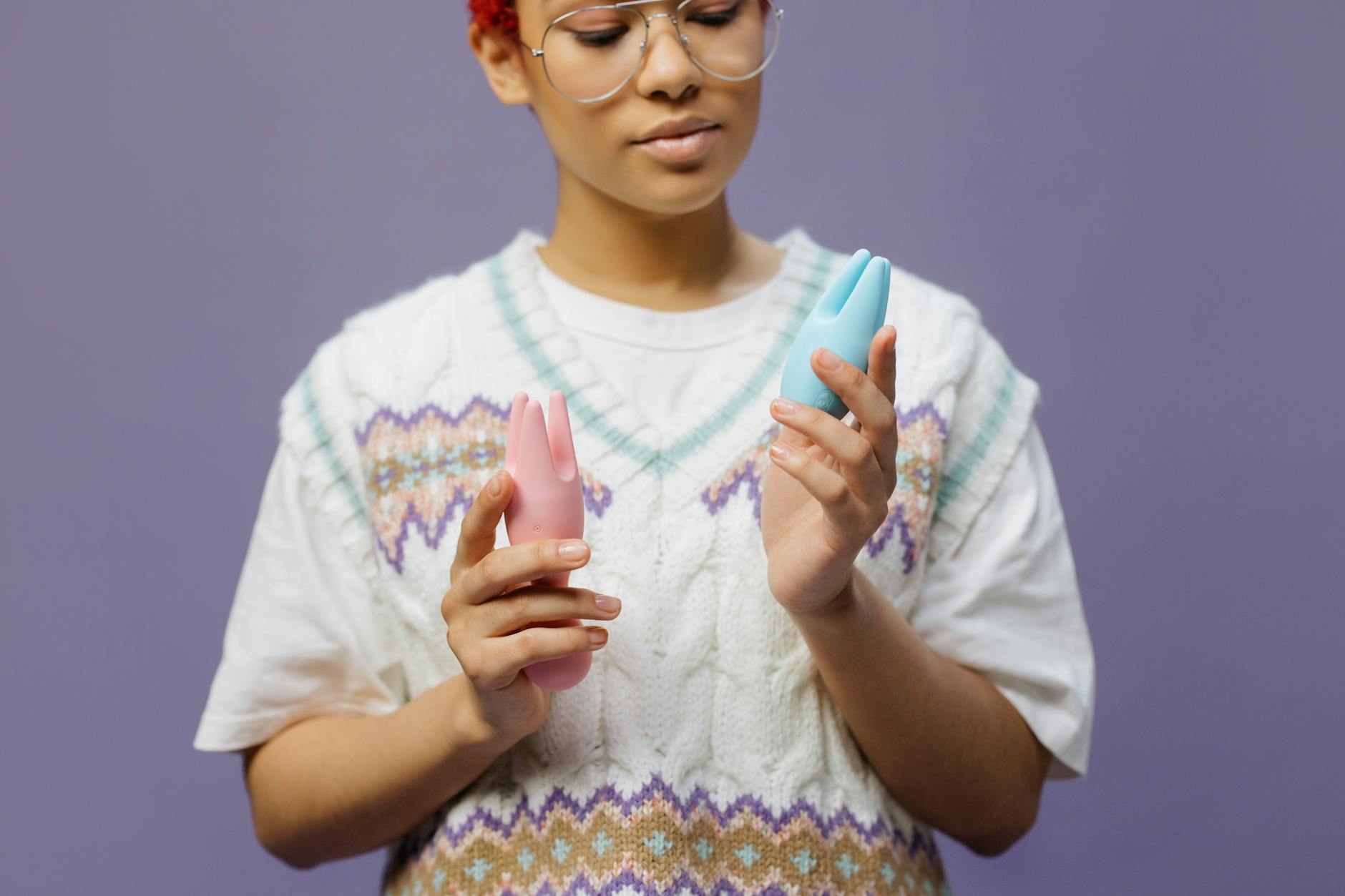
Here's the good news: a Lemon clitoral vibrator is specifically engineered to solve this problem. Its targeted suction and patterns don't require divided attention to work. They anchor you.
Why scattered arousal happens in menopause
Three layers collide:
The hormonal layer. Estrogen regulates your brain's ability to filter background noise and maintain focus on reward. As estrogen drops, your default network—the part of your brain that generates wandering thoughts—becomes harder to switch off. You're not broken. Your brain's management system is literally being recalibrated without your consent.
The physical layer. Without estrogen supporting tissue thickness and blood flow, arousal builds more slowly. When arousal takes longer, your brain has more time to wander. It's a feedback loop: slower build equals more distraction equals slower build.
The life layer. Menopause often happens during a decade when there's genuinely a lot to mentally manage. Aging parents, adult children, career shifts, relationship recalibration. Your brain is not malfunctioning when it won't shut off the to-do list. It's overloaded.
The fix isn't forcing better focus. It's using a tool that works with your scattered attention instead of against it.
How Lemon vibrators specifically help scattered arousal
Unlike traditional vibrators that require sustained sensitivity and rhythm-following, a Lemon clitoral vibrator uses air-suction stimulation that works through layers of tissue. This matters because suction creates a broader, more sustained sensation that doesn't depend on you tracking tiny movements or precise pressure points.
When your attention is scattered, you don't have bandwidth for nuance. Suction stimulation is blunt in the best way. It says: "Here. Focus here. This is happening to you." Your brain doesn't have room to wander when there's a clear, unmissable physical anchor.
The patterned pulses also matter. Instead of a flat, steady vibration, the Lemon cycles through intensities. Your brain naturally follows novelty. When the sensation changes rhythm, your attention snaps back. You can feel it happen. After three minutes of drifting, the pattern shifts and suddenly you're present again.
Practical setup that combats distraction
Remove the ambient friction. Phone in another room. Not just face-down, not just silent. Actually gone. Your brain will find it even if it's off. Close the laptop. Tell your partner if you need them present but quiet.
Extend your warm-up past what feels necessary. When arousal builds slowly, you need at least fifteen to twenty minutes of gentle touch—partner touch, hand touch, whatever—before you reach for the Lemon. This isn't wasted time. This is you building enough baseline arousal that the vibrator becomes the crescendo, not the whole conversation.
Start at pattern one. Not intensity one. Pattern one. The Lemon's lowest pattern is subtle enough that you have to pay attention to feel it. This requirement for attention is a feature, not a bug. You can't drift through a sensation you have to actively notice.
Use it for five to ten minutes without pressure to come. This sounds counterintuitive, but scattered arousal needs permission to unfold. If you're racing toward an orgasm, you'll fracture again. Instead, use the Lemon the way you'd use a meditation bell. It's there to remind you where you are. Let arousal build at its own pace. Often the orgasm comes without effort once you've stopped chasing it.
The role your partner plays (if you have one)
If you're with someone, they need to understand that your scattered attention is not about them or about your desire for them. It's a neurological shift, not an emotional one. What helps most: permission for you to be quiet and internal. Less talking, less checking in, less performance pressure.
What also helps: when your partner wants quickies but you need longer sessions, honesty about that timeline becomes your foundation. In this case, you might say: "I need about twenty minutes to warm up, then five or ten with the vibrator. That's the shape of what I need right now." Clear expectations mean they're not waiting for a sign you're almost there when you're actually still arriving.
The emotional part (which is half the battle)
Scattered arousal in menopause often comes tangled with shame. You think: "I should be able to focus. This is what I'm supposed to want. Why can't I stay present?" And then the shame itself becomes another distraction.
Let me name it directly: your attention didn't break. Your hormone profile changed. This is a tool, not a workaround for a flaw.
I've worked with hundreds of people through this transition. The ones who move through scattered arousal fastest are the ones who stop interpreting it as a personal failure and start treating it as a puzzle to solve. "Okay, my brain wanders now. What helps?" is a very different question than "Why am I broken?"
Using a Lemon clitoral vibrator is solving the puzzle. It's not settling for less. It's actually meeting yourself where you are.
When to add extra support
If scattered arousal is paired with zero desire or persistent low mood, talk to your doctor about hormone therapy options. Scattered focus combined with depression can be a sign that your estrogen is dipping into a range where other support helps.
If scattered arousal happens only during certain points in your sleep cycle, you might be looking at a sleep and attention issue that's menopause-adjacent but not purely hormonal. Sleep deprivation fractures focus faster than anything else. Fix sleep, often the attention follows.
If it's specifically partner-related—you can focus on solo pleasure just fine but not with a partner—that's worth a separate conversation. You might need to rebuild your duo dynamic separately from your solo practice.
The compound effect over time
Here's what I've observed in practice: when someone with scattered arousal uses the right tool consistently, something shifts. By week three or four of regular use, the brain rewires slightly. You're building a neural pathway that says: "When I use this, I can be present." Presence becomes easier. Your brain learns that this specific sensation is worth paying attention to.
Menopause is not the end of your ability to focus during sex. It's a recalibration. And recalibration is not the same as loss. You're learning a different shape of arousal. A Lemon vibrator is the bridge that makes the learning possible. If you want to explore this more in your relationship specifically, communicating about pleasure needs when your partner avoids talking about sex is worth reading alongside this.
Your scattered attention is not a flaw. It's a signal that you need a different approach. And that approach is available.
FAQ: Scattered arousal and the Lemon clitoral vibrator
Why does menopause make focus during sex harder?
Estrogen regulates dopamine and serotonin, which control your ability to filter distractions and stay on reward signals. As estrogen drops in menopause, your default mode network (the part that generates wandering thoughts) becomes harder to quiet. Combined with slower physical arousal, your brain has more time to drift. This isn't a personal failing. It's neurobiology.
Can a Lemon vibrator help if my attention scatters even during solo pleasure?
Yes, often more effectively than with a partner because there's less performance pressure. Start with the lowest pattern on the Lemon and let arousal build without a goal. Many people find that the sustained suction sensation is so anchoring that focus naturally follows. If your attention still scatters, it might be worth checking your sleep, stress level, or thyroid function.
How long should I use a Lemon clitoral vibrator if I'm trying to rebuild focus?
Start with five to ten minutes without pressure to orgasm. Let yourself simply notice the sensation. As your brain learns to anchor to it, you can extend the time. Consistency matters more than duration. Four times a week for ten minutes beats once a week for thirty.
Is scattered arousal during menopause permanent?
It tends to improve with time as your brain adjusts to new hormone levels. Hormone therapy, sleep optimization, and stress management all help. A tool like a Lemon vibrator can make the transition period much more pleasant while your neurobiology recalibrates.
Should I tell my partner I'm using a Lemon vibrator to help my focus during sex?
If you're having partnered sex, yes. Not as an apology or an explanation of what's wrong with you, but as a simple fact: "I'm using this tool because it helps me stay present." Many partners find this clarifying. It shifts the frame from "something's wrong with her arousal" to "here's how we adapt."
What if the Lemon vibrator doesn't help my scattered arousal?
It might be that you need a longer warm-up first. Or that your scattered attention is tied to something other than menopause—anxiety, sleep deprivation, medication side effects, relationship tension. If the vibrator alone isn't anchoring your focus after four weeks of consistent use, it's worth checking those other factors with a doctor or therapist.
Sources
- Stuenkel, C. A., Davis, S. R., Gompel, A., Lumsden, M. A., Murad, M. H., Pinkerton, J. V., & Serin-Colak, Y. (2015). "Treatment of symptoms of the menopause: An endocrine society clinical practice guideline." The Journal of Clinical Endocrinology & Metabolism, 100(11), 3975–4011.
- Rasgon, N. L., Gupta, M., Chen, P., Rao, R., Lunt, T., & Shen, L. (2005). "Depression in women with menopause: Traditional and alternative approaches." Women's Health, 1(1), 35–43.
- Cacchione, P. Z. (2014). "Estrogen and neuroinflammation: A new strategy for neuroprotection." BioMed Research International, 2014, 309145.