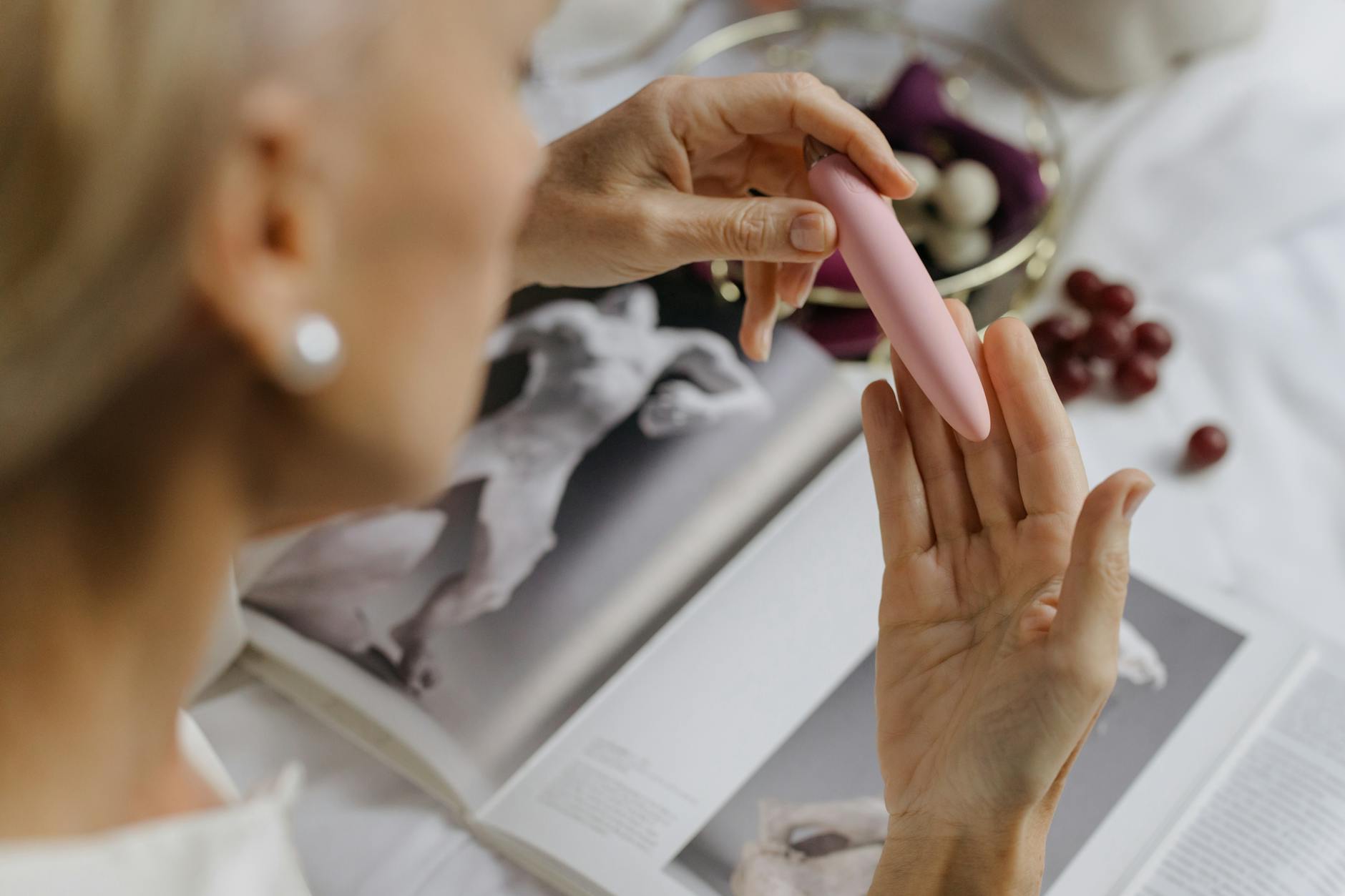
Let's talk about what numbness actually is
Here's the thing: clitoral numbness isn't the same as losing desire. You can want sex intensely and still feel like your body isn't responding the way it used to. That gap between what you want and what you feel is real, it's frustrating, and it's way more common than anyone talks about.
Numbing often starts around the mid-40s, but it can begin earlier or later. It's not a sign that pleasure is ending. It's a signal that the way you access pleasure needs to shift.
Why sensation changes as you age
Three physiological things happen simultaneously. First, the clitoris loses some of its subcutaneous fat padding, which changes how direct stimulation feels. Second, nerve endings become less responsive to repetitive friction in the same way they did when you were younger. Third, blood flow to the genital tissues decreases gradually, which means arousal takes longer to build and sensation feels more diffuse.
None of this means the nerves are dead. They're just asking for different input.
This is where a Lemon clitoral vibrator functions so differently from what might have worked at 25. Traditional vibrators rely on frequency and intensity at a single point. Air-suction stimrators like the Lem work by creating a gentle pulling sensation that engages a wider nerve network without requiring the intense point pressure that can actually numb tissue further.
The numbness paradox: why more intensity backfires
I see this pattern constantly. Someone feels numbness, so they turn up the intensity, buy a more powerful vibrator, or ask for firmer touch. The stimulation gets stronger. The numbness gets worse.
What's happening is nerve accommodation. When you expose nerve endings to sustained high-intensity stimulation, they adapt and stop firing as readily. You need more to feel the same thing. It's the same mechanism as getting used to a loud noise or bright light.
With Lemon sexual toys, especially air-suction designs, you're not fighting that. You're stepping sideways out of it. The sensation pattern is different. The pulse is gentler. Your nerves haven't accommodated to it yet, so it feels fresh and present in a way that blunt force won't.
How to actually rebuild clitoral sensitivity
Step one: Lower your baseline intensity. If you've been chasing numbness with stronger vibration, dial it back. Use a Lemon clitoral vibrator on settings 1 or 2 for the first week, even if it feels underwhelming at first. You're retraining your nervous system, not punishing yourself.
Step two: Extend your warm-up window. Sensation builds over time. Budget 20 to 30 minutes for arousal, not 10. This isn't extra; it's what your body actually needs now.
Step three: Mix stimulation types. Alternate between direct clitoral work and broader external stimulation. Massage the whole vulva, not just the button. Use your fingers for part of it, the toy for part of it. Variety keeps the nervous system engaged.
Step four: Pay attention to texture. If you've been using one toy for years, the sensation has gone flat. A new Lemon vibrator with a different pattern or suction mechanism will wake up nerve endings that had stopped paying attention.
Why air-suction changes the game for older bodies
Lemon's suction-based clitoral vibrators work by rhythmically drawing tissue into a soft chamber rather than vibrating against it. The sensation is broader and less localized. It engages different nerve pathways. Your clitoris has thousands of nerve endings, and most people only access a narrow band of them with traditional vibrators.
For someone experiencing age-related numbness, this is the actual fix. You're not fighting your body's changes. You're using them.
The suction mechanism also means less direct friction, which matters if your tissue has gotten more sensitive to raw stimulation even as overall sensation has dimmed. It sounds like a paradox. It's not. Tissue can be both numb to sustained vibration and more reactive to mechanical irritation. Air-suction sidesteps both problems.
Creating the conditions where sensation returns
Physiology is only part of it. By the time clitoral numbness shows up, most people have spent 20 or 30 years in particular patterns. Your brain knows what to expect from your body. Your body delivers on that expectation.
Breaking that loop requires novelty, safety, and permission. Novelty means a different stimulation method (hence: Lemon clitoral vibrators). Safety means knowing you're not broken and that this is fixable. Permission means deciding that your pleasure still matters, even if it requires more deliberate attention now.
That last part is the one I see people skip. There's a cultural story that sex is supposed to get easier as you age if you've been doing it long enough. Actually, sometimes it requires more intention. That's not failure. That's maturity.
The partner conversation, if you have one
If you're with someone, clitoral numbness often becomes an invisible wedge. You feel less. They assume you're less interested. Sex becomes less frequent. Everyone interprets it as desire fading when it's actually just sensation fading.
The fix is direct: "My body needs different kinds of touch now, and I'm going to explore that. I'd love your help, but I also might need some time on my own to figure this out." That conversation opens space instead of closing it.
Using a Lemon vibrator solo first helps you map what works. Then you can bring that knowledge into partnership. You're not saying "I need a toy now." You're saying "Here's what feels good. Here's how we can explore this together."
When to seek help
Clitoral numbness is normal with aging. Clitoral pain is not. If you're experiencing sharp or burning sensations, that's worth mentioning to your gynecologist. Same if numbness appeared suddenly rather than gradually, or if it's only on one side.
If sensation feels completely absent and you haven't tried a different stimulation method, give yourself two to three weeks with a new approach (like switching to a lemon sucker or air-suction toy) before assuming there's a medical issue. Sometimes your body just needs permission to respond differently.
Hormone levels can also play a role. If you're in perimenopause or menopause, topical estrogen can help with tissue tone and sensitivity. That's a separate conversation with a provider, but it pairs beautifully with technique changes.
The reframe that matters most
Clitoral numbness isn't a deadline. It's a redirect. Your body is telling you that what worked before isn't working now. Most people interpret that as an ending. Actually, it's an invitation to go deeper, slower, and more deliberately into pleasure.
Some of my clients report that the orgasms they have after rebuilding sensation are more intense than what came before. Not because the sensation is stronger. Because they're fully present in a way they weren't when sex was easy and automatic.
That shift is available to you. It starts with letting go of the idea that your body is supposed to respond the way it did at 30, and instead asking: "What does pleasure look like for me now?" A Lemon clitoral vibrator is a tool for that conversation. But the real work is the permission you give yourself to find out.
People also ask
Does clitoral numbness go away on its own?
No, not typically. Nerve accommodation to repetitive stimulation actually gets worse without intervention. The good news is that changing your approach works. Lowering intensity, extending warm-up time, and switching to different stimulation patterns (like air-suction) usually restore sensation noticeably within two to four weeks. Your nerves haven't forgotten how to feel. They've just stopped responding to the old signal.
Can I use a regular vibrator if I have clitoral numbness?
You can, but it often makes things worse. Regular vibrators rely on sustained high-frequency vibration, which accelerates nerve accommodation. If you've already lost some sensitivity, pushing harder vibration into numb tissue typically just produces accommodation faster. Air-suction toys like Lemon vibrators work because they use a completely different mechanism. No constant buzz. Just rhythmic suction. That's why they're so much more effective for people managing age-related numbness.
Is clitoral numbness a sign of menopause?
It can be. Dropping estrogen during perimenopause and menopause does affect clitoral tissue and sensitivity. But numbness also happens independently of menopause, especially as you age and nerve endings naturally become less responsive. The fix is similar either way: changing stimulation method, extending arousal time, and being patient with your body. If numbness coincides with other menopause symptoms, mention it to your provider. If it's isolated, it's usually just a aging-related shift.
How long does it take to restore clitoral sensation?
Most people notice improvement within one to three weeks of consistent use with a different stimulation method. You might feel more sensation within days, or it might take two weeks. The timeline depends on how long you've been using high-intensity vibration (the longer, the longer the reset takes) and how patient you are with lower settings. Some people see dramatic changes by week one. Others need a month. Consistency matters more than speed.
Can hormones help with clitoral numbness?
Topical estrogen can improve clitoral tissue tone and blood flow, which helps with sensation. If you're in menopause or perimenopause, that's worth discussing with a gynecologist. But hormones aren't a substitute for technique changes. A Lemon clitoral vibrator plus improved stimulation patterns plus time will probably do more for your sensation than hormones alone. When people combine both approaches, results are usually best.
What's the difference between numbness and just taking longer to arousal?
Numbness means you can feel touch but it registers as dull or distant, even during direct stimulation. Slow arousal means sensation builds gradually but eventually peaks normally. They're related but different. Slow arousal usually just needs more time and patience. Numbness needs both time and a different type of stimulation. If you're not sure which you're experiencing, try a Lemon sucker or air-suction toy on low settings for 15 minutes and pay attention. If sensation sharpens, you had numbness. If it just takes longer to peak, you had slow arousal.