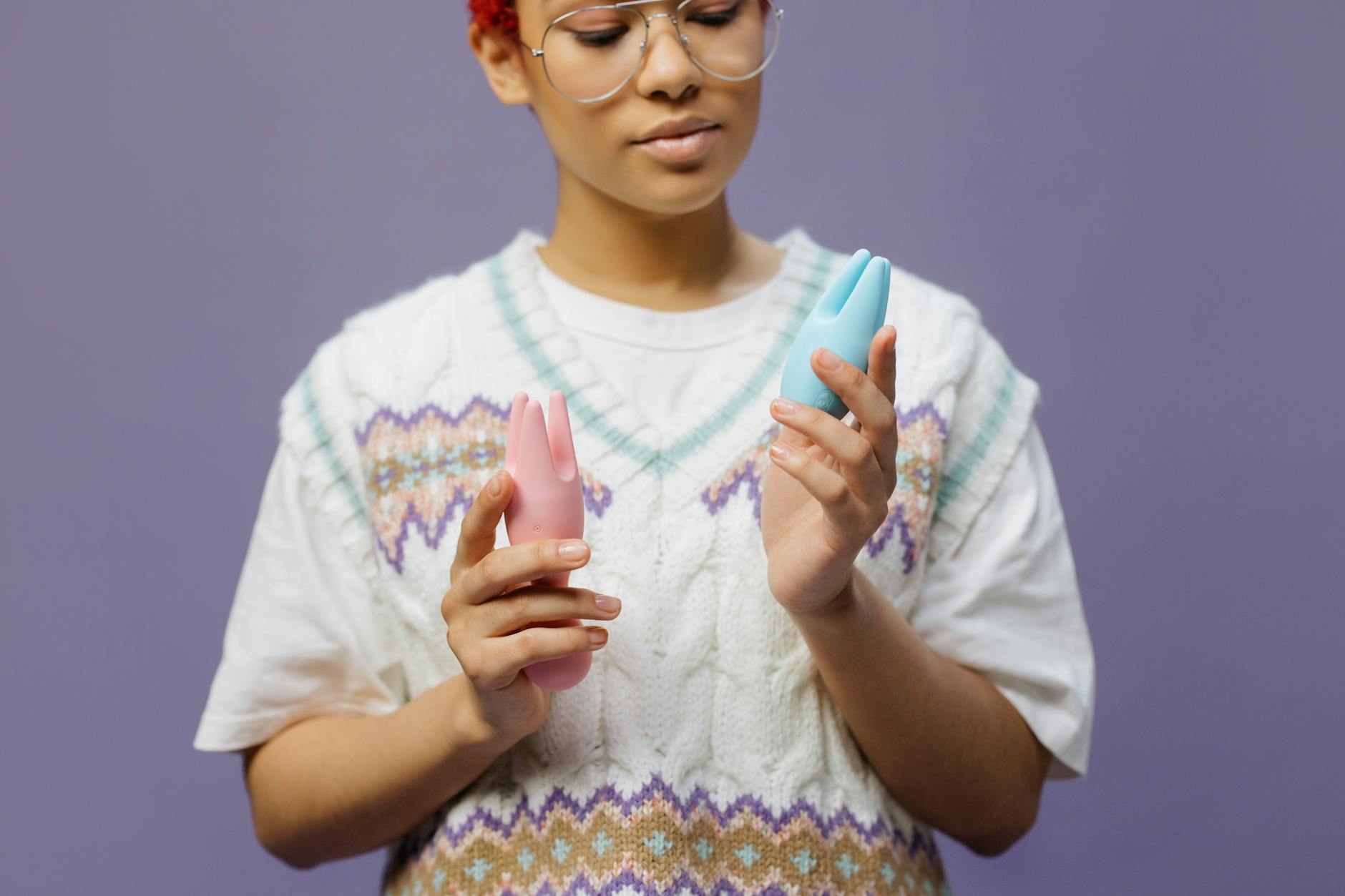
How to Use a Lemon Vibrator When Desire Builds Slowly After Menopause
Let's be honest: menopause changes how arousal works. Not whether it happens. How. And if nobody's told you that difference matters, I'm telling you now.
For a lot of people, desire used to arrive like a light switch. Now it's more like a dimmer that takes 20 minutes to reach the same brightness it used to hit in five. That's not a problem. It's just information. And if you're using that information, a Lemon vibrator becomes less of a shortcut and more of an actual conversation partner in your pleasure.
Why arousal feels like it's slowed down (it actually has)
Estrogen drops. That's the short answer. The longer one is that estrogen affects blood flow, genital tissue thickness, and how quickly the nervous system registers touch as "yes, that." When estrogen is lower, the entire cascade takes longer to activate.
Here's the part that matters: this is not a sign of dysfunction. It's not a referendum on your attractiveness or your partner's ability. It's endocrinology.
Many people I work with panic here. They think slower means broken. It doesn't. It means different. And there's a world of difference between those two words.
The emotional piece (which is actually bigger than the physical one)
Menopause arrives with a lot of other stuff. Maybe your kids are launching. Maybe work is shifting. Maybe your relationship feels a little quieter than it used to. Desire doesn't happen in a vacuum. If your brain is half in the room, your body will match that.
I see this pattern constantly: someone assumes the slowness is hormonal, when really it's about headspace. Both things can be true at once. The hormones slow the pace. The life stuff slows it further. Separating them is the first real move.
Photo by Anna Shvets on Pexels
Building the setup that actually works for slower arousal
If arousal is taking 20 minutes instead of five, that's your window. Work with it instead of against it.
Start with what I call "no-pressure foreplay." This means 15 to 20 minutes of touch that has zero goal attached. Not "let's build toward sex." Just "let's touch and see what happens." Skin to skin. Light touch. A Lemon clitoral vibrator sits here really well because you can introduce it low-key, without it feeling like a performance demand. It's just another texture in the mix.
Most people skip this phase because they think they don't have time. But if your body is asking for a longer runway, giving yourself one is not indulgent. It's respectful to how you actually work.
How Lemon vibrators fit into a slower arousal pattern
A Lemon vibrator like the clitoral suction design is specifically useful when arousal needs time. Here's why.
With manual stimulation or even traditional vibrators, you're either pushing harder or faster to get sensation. That works fine when arousal is already underway. But when it's taking longer to build, that approach can feel like chasing something that's not quite there yet.
A clitoral suction vibrator like those from Lemon Adult Toys works differently. The gentle rhythmic pulse creates consistent stimulation without requiring escalation. You can sit with it at a lower intensity for 10 or 15 minutes, letting arousal build at its own pace. Because the sensation is so precise and sustained, your nervous system can actually catch up.
This matters more than you'd think. A lot of slower arousal isn't "weak" arousal. It's arousal that benefits from steadiness instead of intensity ramping.
The rhythm conversation with your partner (if you have one)
If you're with someone, the slowness of your arousal affects them too. And here's where it gets interesting.
Many partners feel rejected by a longer warm-up phase. "If you need 20 minutes, that means I'm not doing it right" is something I hear constantly. It's not true, but the feeling is real.
The solution is to name it explicitly. "My body is asking for a longer warm-up now. That's not about you. Here's what actually feels good." Then show them. Bring the Lemon vibrator in. Let them see it's not replacing them. It's extending the conversation.
A lot of partners relax once they understand they're not responsible for the speed. The vibrator carries some of the weight. You get your time. They get clarity. Everyone wins.
Patterns that help slower arousal move
Three things I recommend consistently:
One. Let go of the endpoint. Sex doesn't have to be the goal. Pleasure can just be pleasure. If you and your partner agree that tonight is about 30 minutes of touching and a Lemon vibrator and no expectation of penetration, that removes a huge amount of pressure. Pressure kills arousal. Always.
Two. Build a ritual. This sounds woo but it's actually neurological. If every Thursday evening you light a candle, you turn your phone off, and you set aside 30 minutes with your partner or alone, your body starts anticipating that. Arousal literally primes itself. By the time you're actually touching, you're already partway there.
Three. Use the vibrator intentionally. Don't treat it like a last resort. Introduce it early in your warm-up, at the lowest setting. Let your nervous system acclimate to the sensation. Then turn it on and off, play with rhythm, maybe bring a partner's touch in alongside it. The goal is to make the tool part of the conversation, not the grand finale.
What slower arousal actually means for orgasm
Here's a plot twist: slower arousal doesn't predict weaker orgasm. In fact, people I work with often report that after menopause, their orgasms feel more intense, more full-bodied, because arousal built gradually instead of spiking.
That's because deep arousal creates deeper release. You're not chasing a peak. You're settling into a state. And from that state, orgasm feels different. Longer sometimes. More diffuse. Occasionally even multiple.
This is why the Lemon clitoral vibrator works so well here. It's not about speed or intensity. It's about presence. You can be with sensation without forcing it. And when you're with sensation instead of chasing it, everything that comes next lands differently.
The self-compassion piece
If you're frustrated by slower arousal, I want to name something: that frustration is real and valid. You're allowed to grieve a change in how your body works.
But I also want you to know that a lot of people on the other side of this transition describe it as liberation. Wanting sex on your timeline. Exploring what pleasure means when you're not cycling through hormones anymore. Using tools like a Lemon vibrator because they genuinely feel good, not because you're trying to keep up with an arbitrary pace.
Menopause is not the end of your sexual life. It's an edit. And edits can be really good.
Common questions about slow arousal and vibrator use
Does using a vibrator too early stop my natural arousal?
No. A vibrator is additive, not a replacement. Your body will still be building arousal beneath the vibration. I'd argue that introducing steady sensation actually helps slower arousal move, because it gives your nervous system something to organize around.
Will my partner feel bad about me needing a vibrator?
Maybe, at first. Most insecurity comes from a partner thinking the vibrator is a referendum on them. Make it clear it's not. "My body needs this kind of input now. That doesn't mean I don't want you." Show them how they can be involved. The insecurity usually dissolves once they understand they're not being replaced.
How long should warm-up actually take?
As long as you need. Some people find 15 minutes is the sweet spot. Others need 30. There's no "normal." You're aiming for the point where arousal is actually present, not forced. A Lemon vibrator can help you find that threshold.
Is it normal for arousal to be inconsistent after menopause?
Completely. Some days your body responds quickly. Other days it needs more time. Stress, sleep, where you are in your cycle if you're not fully post-menopausal. All of it matters. The consistency you had before was partly hormonal. You're allowed to have a more variable experience now.
Can I use a Lemon vibrator alone if I don't have a partner?
Yes, obviously. Solo exploration is often where people discover what actually works for them post-menopause, without performance pressure. That information then becomes valuable if you do partner sex later.
What if I'm still not getting aroused even with more time and a vibrator?
Then it's worth checking other things. Sleep, stress, medications, relationship satisfaction. Arousal is complicated. A vibrator can help, but if there's nothing underneath to build from, it's worth talking to someone. A therapist, a doctor, someone who can help you figure out what's actually missing.
The bottom line
Slow arousal after menopause isn't a problem to solve. It's a rhythm to work with. Give yourself time. Bring in tools that feel good. Let pleasure be the point instead of an afterthought. A Lemon clitoral vibrator becomes most useful when you stop trying to speed things up and instead find the pace that actually works.
Your pleasure hasn't gone anywhere. The route just changed. And honestly? The new route often leads somewhere better.
Want to explore how arousal patterns shift in relationships? Read about how to use a Lemon vibrator when your partner's arousal takes longer than yours for a partner-focused conversation. Or explore how to use a Lemon vibrator when sensation changes after antidepressants if medication is also in the picture.