
Let's start with the obvious truth
Medications change how your body works. Antidepressants, blood pressure drugs, antihistamines, even birth control shifts can flatten arousal, delay orgasm, or make climax feel distant. The medical term for this is "sexual dysfunction," which is honestly a garbage phrase because your sexuality isn't broken. Your neurochemistry just got recalibrated, and so did your timeline.
Here's what almost nobody tells you: this is adjustable. Not in a "grin and bear it" way. In a real, measurable, orgasm-having way.
Why medications delay orgasm in the first place
Most medications that affect sexual response do one of three things. They lower dopamine (the chemical that drives desire and orgasm). They increase serotonin (which can feel calming but also mutes the urgency of arousal). Or they mess with blood flow and nerve sensitivity.
SSRIs (selective serotonin reuptake inhibitors like sertraline or fluoxetine) are the most common culprit. They're also often the most worth it for your mental health. The trade-off is real. But it's not permanent, and it's not unsolvable.
Beta-blockers, antihistamines, and certain hormonal birth controls work differently on the body but often land in the same place: orgasm feels further away, takes longer to build, or shows up less intensely than it used to.
The recalibration phase (weeks 1-4)
When you first start a medication or change dosages, expect your sexual response to feel unfamiliar for about two to four weeks. Your body is learning new baseline chemistry. This isn't failure. This is adaptation.
During this window, here's what I recommend:
Lower your pressure expectations entirely. Don't set out to have an orgasm. Set out to feel sensation. This sounds like a mindfulness cliche, but it actually works neurologically. When you release the goal, your nervous system stops bracing, which paradoxically makes climax easier.
Use a lemon vibrator on a lower setting than you normally would. If you typically start at intensity level 3 on the Lem, begin at level 1 or 2. The point is to feel the vibration as pleasurable, not to chase intensity. Your nerve endings are recalibrating. Give them gentle input.
Extend your warm-up time by 50 percent. If you usually need 10 minutes, budget 15. If foreplay used to take 20 minutes, aim for 30. This isn't about trying harder. It's about giving your body the extended timeline it actually needs right now.
Keep a low-key journal. Note how long arousal takes, what intensity level feels good, whether anything shifts day to day. This isn't medical documentation. It's just pattern spotting. After two weeks, you'll see where your new baseline is.

Photo by cottonbro studio on Pexels
The plateau problem (weeks 4-8)
After the initial shock settles, many people hit a different wall. Arousal builds fine. But then it stalls. You reach a peak that doesn't quite become an orgasm, or the orgasm feels flat and distant instead of the full-body experience you remember.
This is the medication equivalent of being stuck on a train that's moving but won't accelerate further. The fix involves working with intensity and rhythm differently.
Experiment with pattern changes, not just speed increases. The Lem has multiple vibration patterns. If you've been using one pattern, try others. Sometimes a rhythmic pulse works better than consistent vibration when your neurochemistry is shifted. Sometimes it's the opposite. You're looking for the pattern that makes your nervous system wake up.
Build a "staircase" approach. Start at level 1, spend two minutes there. Move to level 2, stay for two minutes. Progress to level 3 or 4 depending on what you're using. This graduated intensity sometimes triggers the chain reaction that a sudden jump to high intensity won't. You're teaching your body to climb the arousal curve rather than trying to leap to the top.
Add external stimulation if you're only using one type. If you've been using the lemon clitoral vibrator alone, add manual touch to your breasts, neck, or inner thighs. If you're only doing clitoral work, spend time on penetration or pressure elsewhere. The goal is to distribute sensation across your body so the nervous system gets more input channels to work with.
This matters because medications sometimes narrow the pathways to orgasm. Diversifying stimulation creates new neural routes.
When to bring your partner (or yourself) back in
If you're using a lemon vibrator with a partner, this is where things get awkward in the best way. You've probably been relying on partner involvement to push you over the edge. Now you might need them to do less of that. Or differently.
Talk about the timeline shift explicitly. "I'm on a new medication and I need about 30 minutes and a different approach to orgasm." This is information, not criticism. It actually helps your partner because they stop wondering if they're doing something wrong.
Ask them to stay present but less goal-focused. Meaning, you still want them there and engaged, but the framing shifts from "help me climax" to "let's explore what feels good right now." This takes the performance pressure off both of you.
Consider solo sessions as data collection, not replacement. When you're alone with your lemon vibrator and no performance pressure, you can feel your actual response without someone's expectations in the room. This is where you figure out what works. Then you bring that knowledge back to partnered sex.
The medication-specific adjustments
Different drugs work differently on pleasure. If you're on an SSRI and the Lem isn't doing the job at higher intensities, sometimes the answer isn't more power. It's different stimulation. Suction-based vibrators (like the Lem) often work better for medication-delayed orgasm than straight vibration because they create a different kind of nerve activation.
If you're on a beta-blocker, blood flow might be the limiting factor. This means extended warm-up, possibly more foreplay, and sometimes topical stimulation (like a lube that increases sensation) helps more than a new vibrator would.
If hormonal birth control is the culprit, the delay often comes with lower desire overall. This is a conversation with your doctor about whether the trade-off is worth it. But in the meantime, a lemon vibrator can help you reconnect with sensation even when desire feels muted.
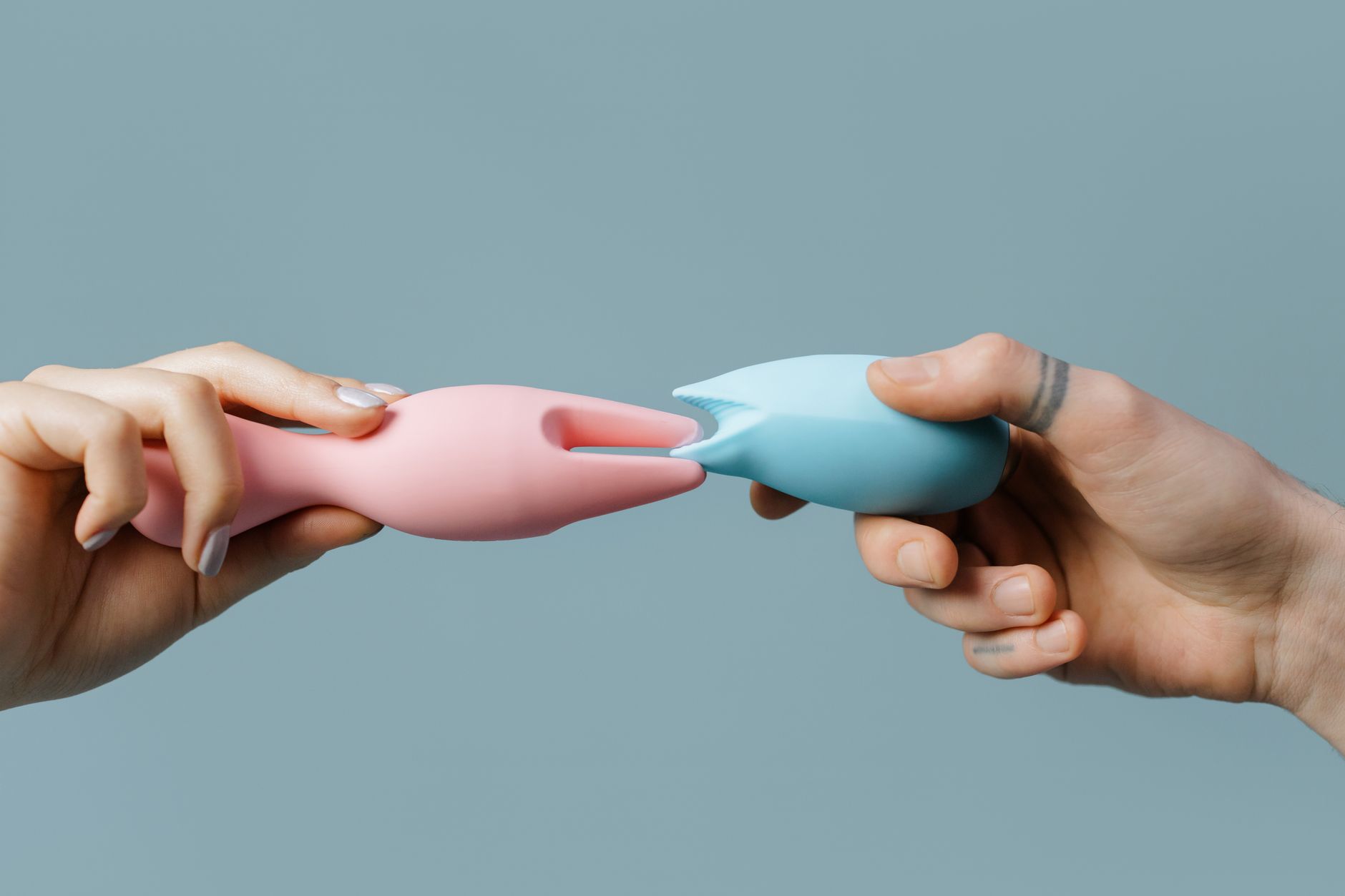
Photo by cottonbro studio on Pexels
The conversation with your doctor that matters
If you're on a medication that's genuinely killing orgasm and it's been longer than 8 weeks, bring this up. Not as shame. As information. You have options. You might be able to adjust timing (take the med at night instead of morning). You might be able to switch to a different class of drug. You might be able to add a medication that specifically counters the sexual side effect.
Doctors often don't ask about this unless you tell them. They assume people will volunteer. We don't. So you have to. "This medication is working great for my mood, but I'm having trouble with orgasm. What are my options?" is a perfectly normal clinical conversation.
Don't let shame or embarrassment stop you. Your sexual function is part of your overall health, and a good doctor will treat it that way.
What actually happens over time
After about 12 weeks on a new medication, most people's sexual response stabilizes into a new normal. It might be different from before. It might be slower. But it becomes reliable and orgasms usually come back.
Some people find their new baseline is actually better in ways they didn't expect. Antidepressants often reduce anxiety around sex, which can make pleasure feel less tangled. Beta-blockers can reduce performance pressure because things are slower anyway, which paradoxically makes climax easier.
Your lemon vibrator becomes part of how you learn this new normal. Not as a workaround. As a tool that helps you understand what actually turns you on and how your body works now.
FAQ: Medication and orgasm
How long does it usually take for sexual side effects to stabilize after starting a medication?
Most people see some stabilization within 4-8 weeks, with fuller adaptation around 12 weeks. Individual variation is huge, though. Some people adjust in two weeks. Others take three months. If nothing has shifted after 12 weeks, that's worth mentioning to your doctor.
Can switching the time of day I take my medication help with delayed orgasm?
Sometimes, yes. If you take an SSRI in the morning and it's flattening evening arousal, taking it at night might shift the timing. But this absolutely requires your doctor's approval. Never adjust medication timing on your own.
Does using a vibrator make medication-delayed orgasm worse or better?
Usually better. A lemon vibrator gives you consistent, customizable input that your nervous system can work with. It removes the variability of manual stimulation, which can actually help when your response is slower. The Lem specifically works well because you can control intensity and patterns precisely.
Is it normal for my orgasm to feel different on medication, even if it eventually returns?
Completely normal. Orgasms on SSRIs often feel less explosive and more sustained. Orgasms on blood pressure meds might feel more localized. This isn't better or worse. Just different. Most people adapt and stop comparing to how it used to feel.
What if my partner gets frustrated with the longer timeline?
This is about communication and expectation setting. Frame it as "my body's new baseline" rather than "I'm broken." If your partner is unwilling to adjust, that's a relationship conversation, not a medication conversation. A partner who pressures you sexually while your body is adapting to medication is not meeting you where you are.
Should I try a different vibrator if the Lem isn't working after medication changes?
Not immediately. Give your current vibrator at least 4-6 weeks with adjusted settings and patterns before switching. Medication adjustment and vibrator adjustment at the same time makes it impossible to know which is which. Once your medication baseline is stable, you'll have clearer data about what you actually need.
Your sexuality isn't broken by medication. It's just operating on a different schedule. That schedule is absolutely workable. And honestly, sometimes knowing exactly how your body responds to medication side effects teaches you things about pleasure that you wouldn't have figured out otherwise.