
Let's start with what just happened
Your partner suggested adding a toy to sex. Maybe they were direct. Maybe they hinted. Either way, something shifted. You might feel a mix of things right now: curiosity, nervousness, a bit of defensiveness, possibly relief. All of that is normal and worth acknowledging before you do anything else.
The moment a partner introduces the idea of toys, most people land in one of two unhelpful narratives. Either "they want to use it because I'm not enough" or "they're trying to spice things up because they're bored with me." Both are stories we tell ourselves, not facts. What actually happened is simpler: they want to explore something new together. That's it. And introducing a Lemon clitoral vibrator into partnered play is completely doable if you approach it with honesty instead of anxiety.
Why the conversation matters more than the toy
Seriously. The vibrator is the easy part. The conversation is where couples either build trust or accidentally reinforce old worries.
If your partner brought this up, the kindest thing you can do is separate three things in your head: their desire to try something new, your feelings about your body, and what this means for your partnership. They're not connected unless you link them. Someone can want to explore clitoral vibrators AND think you're attractive AND be excited about you. These statements aren't in conflict.
Have the actual conversation before you buy anything. Ask what drew them to this. Were they curious about a specific sensation? Did they read something? Do they want to see you experience something new? Do they want to feel included in your pleasure? Listen to the answer without defending yourself.
Then tell them what you're feeling. "I'm excited but a bit nervous about performance" or "I worry this means something is wrong" or "I'm curious but I need to move slowly." Your honesty gives them permission to be honest back. That's where the real intimacy happens.
The setup: what actually helps
Let's say you're both on board. Here's what I tell couples in my practice.
Pick a time that doesn't demand anything. Not right after work stress. Not when you're hungry or tired. Not with a deadline hanging over you. Pick an afternoon or evening where you both have breathing room. If this is your first time together with a toy, give yourselves permission to just explore it. You don't have to finish with an orgasm. You don't have to perform. You're learning.
Start clothed. Seriously. Hold the Lemon vibrator, look at it together, talk about it. Your partner can trace where they imagine it will go. You can show them what intensity feels right. This takes the pressure off "time to perform" and moves you into "curious exploration." There's a massive difference.
Decide on a signal or word beforehand. Not a safe word necessarily, but something you can say if you want to pause. "Slower," "different spot," "take a break." Your partner needs to know these are invitations, not rejections. If you say "softer," that means "keep going but adjust," not "I'm uncomfortable." Naming this removes the guessing game.
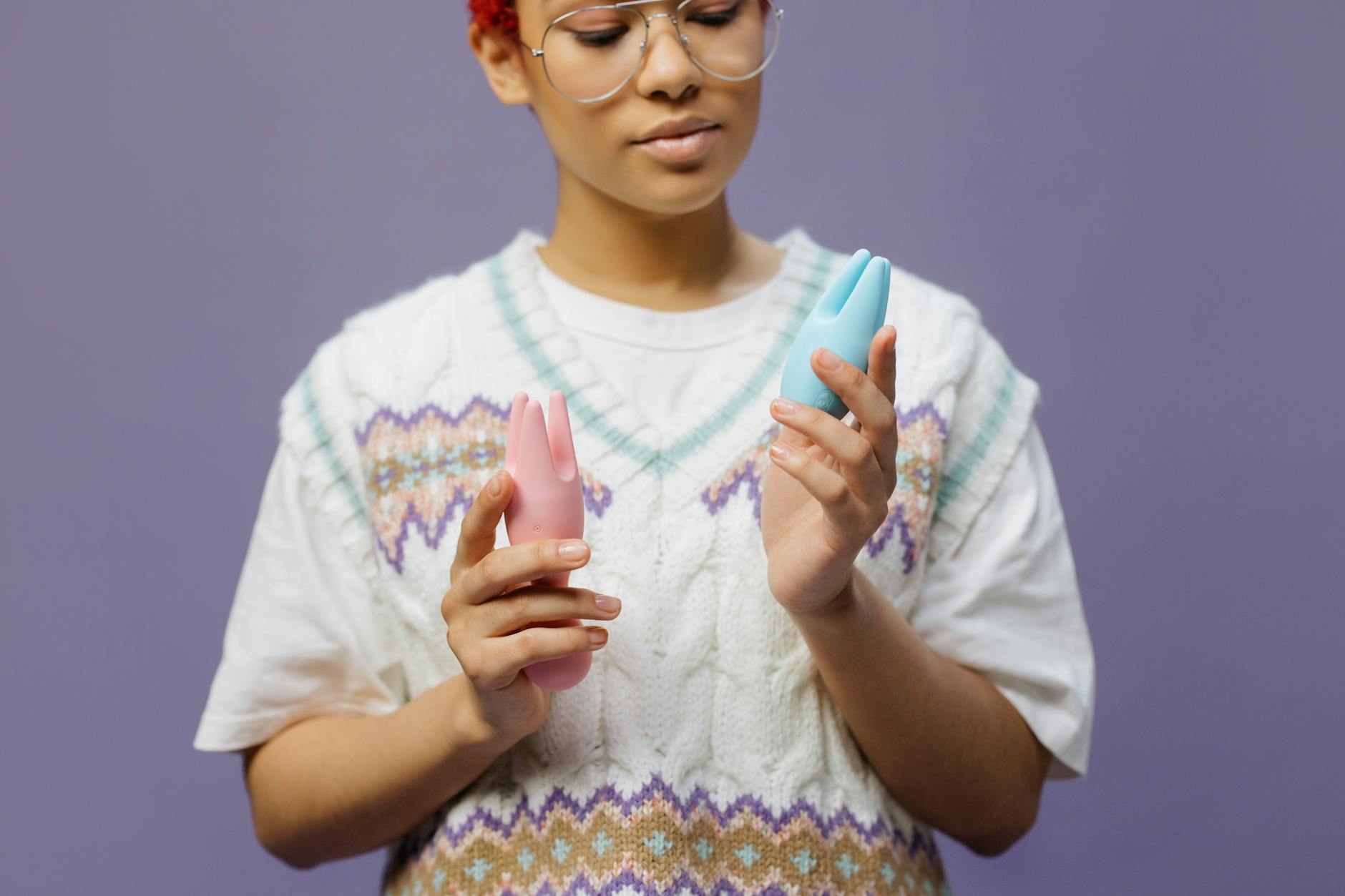
Photo by cottonbro studio on Pexels
What to actually do when you're ready
Your partner doesn't need to use the Lemon vibrator on you for their first time. You can. This flips the power dynamic in a useful way. You get to control speed, pressure, and positioning. Your partner gets to watch and participate without the anxiety of "am I doing this right."
Start on lower settings. The Lemon clitoral vibrator has multiple intensities for a reason. Spend time at level 1 and 2. Your body will tell you when it's ready for more. Don't rush to "maximum intensity" because you think that's the goal. The goal is sensation you actually enjoy.
If your partner wants to use it on you, guide their hand. "Try circling here" or "press a bit closer to the hood." This isn't criticism. This is you teaching them what feels good. Most partners actually want this information. It makes them feel less uncertain.
The clitoral vibrators that work best with partners are ones like the Lemon, which give you both room to be involved. Your partner can hold it while you control the intensity. You can use it while they touch you elsewhere. The toy becomes a tool for connection, not a replacement.
What to do when things feel awkward
And they might. You might feel self-conscious. Your partner might feel nervous about their role. One of you might orgasm quickly, the other not at all. Someone might start overthinking and lose sensation.
None of this is a failure.
Stop. Talk about it. "I got in my head" is enough explanation. You don't need to fix it in that moment. You can laugh, take a break, try again later. Most couples I work with find that the second or third time is actually better than the first. You've already crossed the awkward threshold. You know what to expect. The pressure lifts.
If one of you orgasms and the other doesn't, that's fine too. Sex with toys doesn't have to follow the old rules about timing or synchronization. Your partner can keep going, or they can stop and you can continue with the vibrator alone. This is actually where a lot of couples discover they can have different experiences in the same session without anyone feeling abandoned.
If you find that the clitoral vibrator helps you reach orgasm more easily, tell your partner. This is valuable information. It's not "better" than sex without it. It's just different. And knowing that you can reliably experience pleasure in your own body is genuinely good for your relationship. It means you're less dependent on your partner for your own satisfaction, which paradoxically makes partnered sex less pressured.
The bigger picture
Introducing a toy like the Lemon vibrator is actually a test of something bigger: can you and your partner talk about pleasure without shame. Can you ask for what you want. Can you receive it without making it mean something it doesn't. Can you try something new and laugh if it's awkward.
These skills matter way beyond toys. They're the foundation of trust and genuine intimacy. If you can navigate buying and using a clitoral vibrator together with honesty, you can navigate a lot of other things too.
Your partner didn't suggest this because you're failing. They suggested it because they want to deepen something with you. That's worth taking seriously. It's also worth enjoying.
People also ask
What if I feel insecure that my partner wants to use a vibrator?
Insecurity is real, and it makes sense. For decades, vibrators were sold as "what you need when you don't have a partner." That narrative is complete nonsense, but it sticks. The truth: couples use vibrators together because it opens up sensation neither person could access alone. Your partner wanting to explore with you is actually a sign they want more with you, not less. That said, your feelings matter. Tell them. "I'm worried this means you're not satisfied with me." A good partner will address that worry head-on. If they get defensive instead of reassuring, that's different information worth exploring together.
Should my partner and I use the same vibrator?
No reason you can't, but it's not necessary. The Lemon vibrator is designed for external clitoral stimulation, so whoever has a clitoris can use it. If your partner doesn't, they can enjoy it differently, like using it on you or on themselves if they have the anatomy for it. Some couples enjoy the ritual of sharing one toy. Others prefer having their own. There's no rule.
What if neither of us knows what we're doing?
That's actually the best position to start from. You're both learning together, which removes the pressure of someone being the "expert." Play with it on your own first if that helps you feel less awkward when your partner is watching. Read the guide that comes with it. Look at resources. But honestly, exploration beats overthinking every time.
How often should we use a vibrator together?
As often as feels good. Some couples integrate it into partnered sex regularly. Some use it occasionally. Some try it once and then move on to something else. There's no prescription. Your body and your partnership will tell you what rhythm works. The point isn't frequency. It's that you're both choosing it.
What if my partner loses interest after we try it once?
That happens. You might try it and realize it's not your thing, or it was a one-time curiosity. That's completely fine. You explored something together, learned something about each other, and moved on. Not every experiment has to become a regular practice. What matters is that you tried and communicated honestly about it.
Can a clitoral vibrator replace partnered sex?
No, and it's not designed to. The Lemon vibrator is a tool for a specific kind of stimulation. Partnered sex involves presence, connection, and touch in ways a vibrator can't replicate. If you're using a vibrator and experiencing less interest in partnered sex, that's information worth exploring. But using one sometimes doesn't replace intimacy. It extends it.
The real thing that's happening
Your partner brought this up because they want to know you better. They want to explore you, to see you experience new things, to be part of your pleasure. That's an invitation, not a criticism.
Take it slow. Stay curious. Talk about what you're feeling. Use lube if you need it. Laugh if things get awkward. The Lemon vibrator is just a tool. What actually matters is that you and your partner are willing to explore pleasure together without shame.
That's the intimacy. The toy is just the excuse.