The mismatch nobody wants to admit
Let's be real. One of you gets turned on by a thought, a text, a glance. The other needs time, context, deliberate attention before desire even registers. Neither version is wrong. But trying to sync them without help? That's where frustration lives.
Most couples I work with don't talk about this. They describe it sideways. "We never have time for sex," they say. Or, "I feel like I'm always waiting for them to be ready." What they're actually describing is an arousal timing mismatch. One person's baseline arousal climbs fast. The other's is a slow burn.
Why arousal patterns don't naturally align
Arousal isn't one speed. It's shaped by psychology, hormones, attention capacity, and what's happening in your body that day. Someone on a faster arc might be driven by novelty or external stimulus. Someone on a slower arc might need emotional safety, mental clarity, or time to release the day's tension.
This doesn't mean one of you is broken or doesn't want sex. It means you're operating on different timelines. And the longer you pretend this isn't true, the more one person feels rushed and the other feels rejected.
What happens without a bridge
Here's the pattern I see repeatedly. Fast-arousing partner initiates. Slow-arousing partner feels pressure and either withdraws or performs compliance. Resentment builds quietly. The fast person thinks their partner isn't attracted to them. The slow person feels controlled. Neither of you is actually having pleasure.
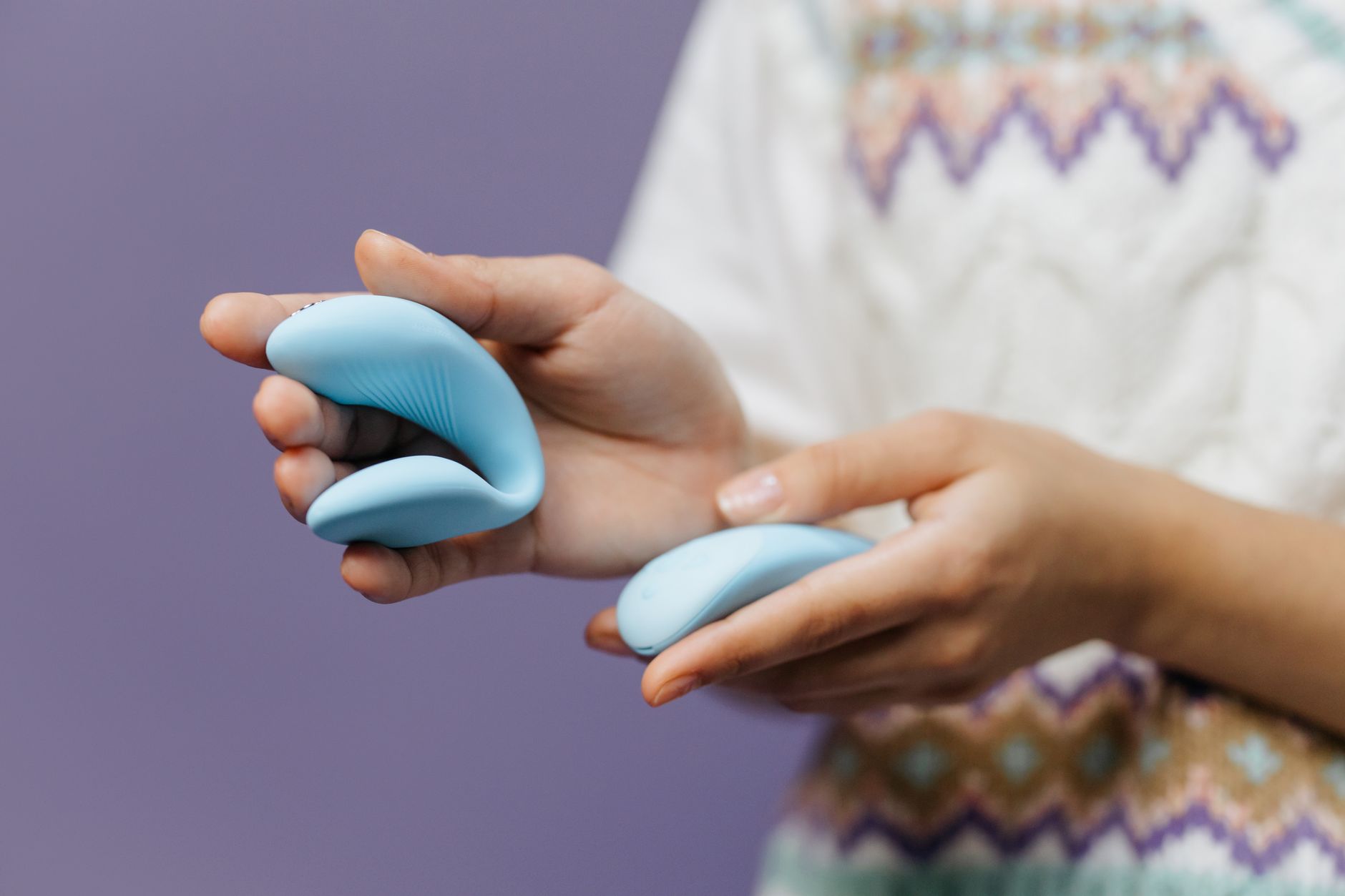
A Lemon clitoral vibrator changes the equation. It's not about replacing your partner's touch. It's about honoring the fact that your bodies have different rhythms and building a structure that works for both of you.
Using a lemon vibrator to build independent readiness
Here's the practical shift. Instead of one person waiting while the other catches up, you each move toward arousal independently first.
If you're the faster partner, start earlier than you'd normally initiate. Ten or fifteen minutes before you want to be intimate, spend time with your lemon vibrator alone. Explore sensation. Bring yourself partway up the arousal curve. This isn't masturbation for its own sake. It's foreplay with yourself, on your timeline.
If you're the slower partner, give yourself permission to start warming up before you feel desire. This sounds backward, but it works. Your brain and body don't always move in sync. Spending five minutes with a lemon clitoral vibrator while your partner is nearby can be enough to shift your nervous system. You're not forcing arousal. You're creating the conditions for it.
The magic happens when you both arrive at moderate arousal independently. Then you actually connect from a place of readiness, not obligation.
Integrating the vibrator into partnered time
Once you've each built some readiness solo, bring the lemon vibrator into the room together. This is where the real flexibility lives.
Use it while your partner touches you elsewhere. Use it while they watch. Use it while they're inside you, if that's how you have sex. The point isn't that the vibrator replaces them. It's that it lets your body get what it needs while staying connected.
If you're the faster partner and your slower partner finally arrives at arousal while using the vibrator, don't pull it away. Let them stay with it. They might come, or they might just reach a level of readiness that feels good. Either way, they got there because their body had what it needed.
If you're the slower partner, using the vibrator might mean you need less time than you thought. Or you might discover that you need the vibrator every single time. That's also fine. It's not a sign of dysfunction. It's data about what works for your body.
Communicating about the timing gap
The vibrator is a tool, but the conversation is what fixes the relationship. Most couples never actually name the mismatch. You need to.
Start simple. "Your arousal builds faster than mine, and I think I've been resenting that instead of working with it." Or the reverse. "I've been feeling like you don't want me because you take longer to get ready."
Then get practical. "I want to try something where we both warm up a little before we connect." Introduce the vibrator as part of that plan, not as a fix for a broken partner.
The conversation prevents the vibrator from becoming a Band Aid on deeper frustration. If one person secretly resents the other's timing, the vibrator won't solve it. But if you're both willing to work with the difference instead of against it, the vibrator becomes part of that solution.
What a lemon vibrator handles that nothing else does
External stimulation on the clitoris responds quickly to vibration. If you're the slower partner and your body needs 25 minutes to build arousal, a clitoral vibrator can compress that timeline without requiring your partner to do anything differently. You get direct, consistent stimulation that your hand or most partnered touch can't replicate.
If you're the faster partner, it lets you extend your pleasure without putting pressure on your slower partner to perform. You can use it before, during, or after partnered sex depending on what feels good.
The Lemon clitoral vibrator specifically works well for this because the suction pattern is different from traditional vibration. It stimulates the clitoris without friction, which means it feels good whether you're highly aroused or still building. You can start using it earlier in the arousal process without discomfort.
The permission piece
Here's what actually changes when couples start using a vibrator intentionally around arousal timing. Permission. You both get permission to have different needs. The faster person gets permission to move at their own pace instead of dampening their arousal to match their partner's. The slower person gets permission to take the time they need instead of forcing speed.
That permission, more than the vibrator itself, is what shifts the dynamic. The vibrator is just the tool that makes that permission possible.
When timing differences hide something else
Sometimes what looks like an arousal timing mismatch is actually stress, disconnection, or resentment about something else in the relationship. If your slower partner suddenly became faster, or vice versa, that's worth noticing. Something changed. It might be work stress, medication, how seen or unseen they feel in the relationship.
A vibrator can't fix that. But a vibrator can give you breathing room while you actually address the real issue. Use that space to reconnect.
Building a sustainable rhythm
This isn't a forever problem you're solving. It's a rhythm you're building. Some months, with stress or hormones, arousal timing shifts. Some months, you both feel more aligned. The tools you create now should be flexible enough to adjust.
Use the lemon vibrator when the mismatch is sharp. Don't use it if you're both feeling in sync. Let it become a resource instead of a requirement. That way, it stays about pleasure, not about fixing.
Frequently asked questions
Can a lemon vibrator actually help if our arousal patterns are really different?
Yes, but only as part of a bigger shift. The vibrator bridges the timeline gap by letting each partner reach moderate arousal independently. But if one of you secretly resents the other's speed, no tool fixes that. The conversation about the mismatch matters as much as the vibrator.
What if my partner sees the vibrator as replacing them?
That's a real fear, and it needs direct addressing. Be clear. "I want us to be intimate. I also need my body to have what it needs to get there. Those things can both be true." Use the vibrator during partnered sex at first, so your partner sees it as part of connection, not separate from it.
How do I know if my arousal is genuinely slower or if I'm just not attracted to my partner?
Two different things. Low desire for your specific partner is a separate issue from slow arousal once desire is there. If you feel desire for others but not your partner, that's worth exploring in depth, possibly with a therapist. If you have slow arousal generally but do feel attracted to your partner, that's what a clitoral vibrator can help with.
Should we always use a vibrator now?
Nope. Let it be optional. Some sessions you'll want it. Some sessions you won't. The goal is flexibility, not dependency. If you find you can't have sex without it, that's useful information worth discussing. But most couples find it becomes something they use sometimes, not always.
Is using a vibrator together considered cheating?
Only if you've agreed it is. Talk about your boundaries beforehand. Many couples find that using a toy together deepens intimacy instead of threatening it. If it feels like cheating to one of you, it's a sign you need more conversation about what sex means in your relationship.
What if using the vibrator highlights that our arousal timing is the smallest part of the problem?
Then you've learned something important. Sometimes when we fix the surface issue, we see what was underneath. That's hard but also clarifying. You might need couples therapy to address deeper disconnection. That's not a failure. That's you using the tool to understand what you actually need to work on.
The real work
Using a lemon clitoral vibrator when your arousal patterns don't match isn't about the vibrator. It's about accepting that you're different and building something that works anyway. The vibrator just makes that possible. The real work is the conversation, the permission, and the commitment to meeting each other where you actually are instead of pretending you're the same.