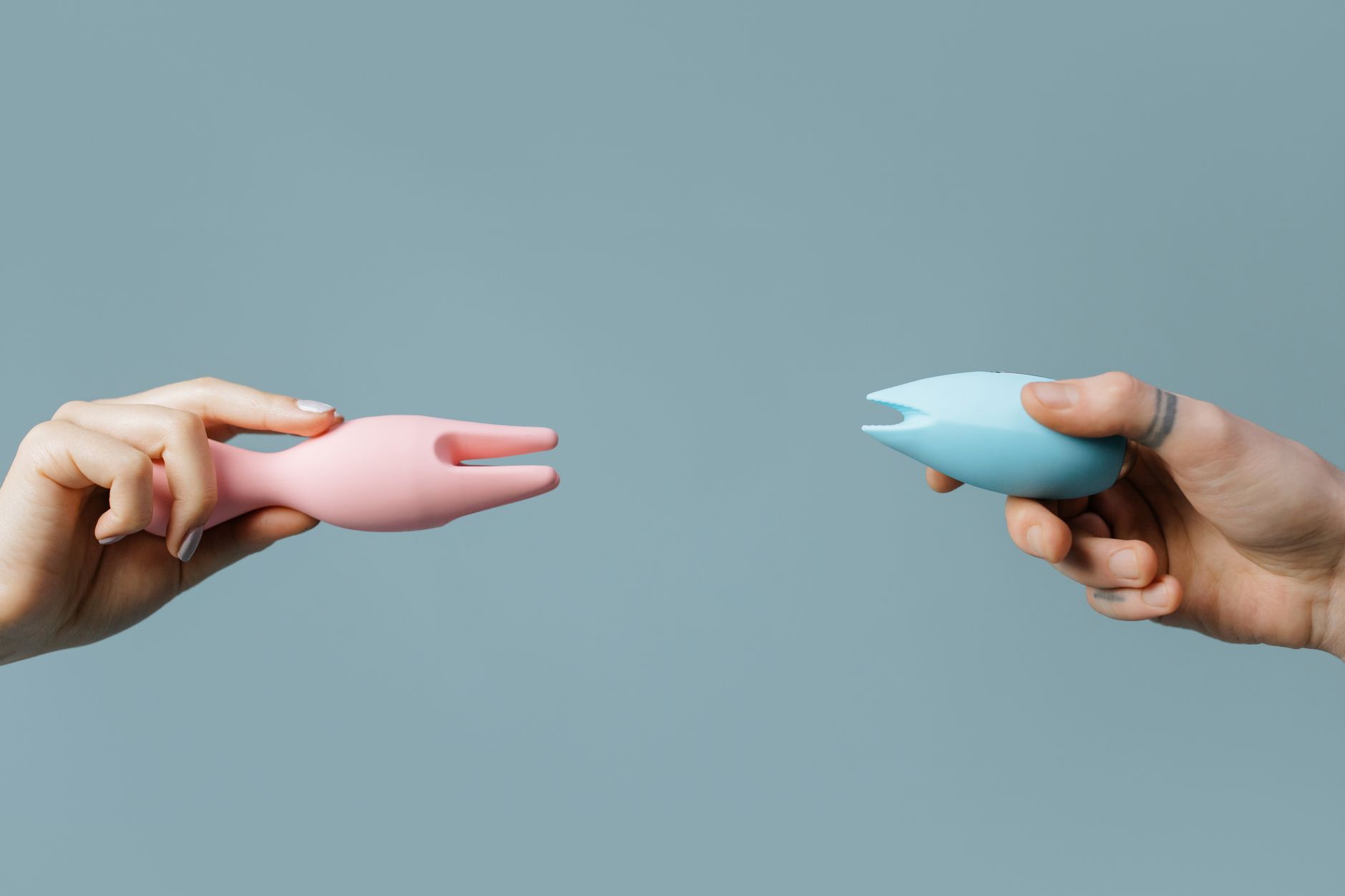
Let's talk about the thing nobody addresses
Here's the honest bit: solo pleasure with a partner present is not the same as solo pleasure alone, and pretending it is will tank both. The moment your partner knows you're using a Lemon vibrator in the next room (or on the couch while they're reading), the dynamic shifts. It's not bad. It's just different. And different requires communication, boundaries, and clarity about what you're actually asking for.
Most couples never talk about this. They either avoid it entirely, or one person feels excluded, resentful, or weirdly turned on without knowing how to say so. Both paths lead to tension. The third path, the one I recommend, starts with honesty.
Why solo pleasure matters even in a partnership
Let me be direct: your pleasure doesn't belong to your partner. It belongs to you. That doesn't mean you owe them access to it, or even an invitation. You get to choose solo time with your Lemon clitoral vibrator the same way you get to choose a solo run, a therapy session, or twenty minutes with a book locked in the bathroom.
But there's a practical reality when you're living with or regularly spending time with a partner: sometimes they'll know it's happening. And sometimes, frankly, you'll want the freedom to self-pleasure without their presence or permission mattering. The disconnect comes when that freedom hasn't been explicitly discussed.
In my work with couples, I see three patterns. First, one partner sneaks around and feels shame. Second, one partner senses it's happening and feels excluded. Third, both partners acknowledge it openly and suddenly there's no charge around it at all. Guess which one usually leads to better intimacy overall?
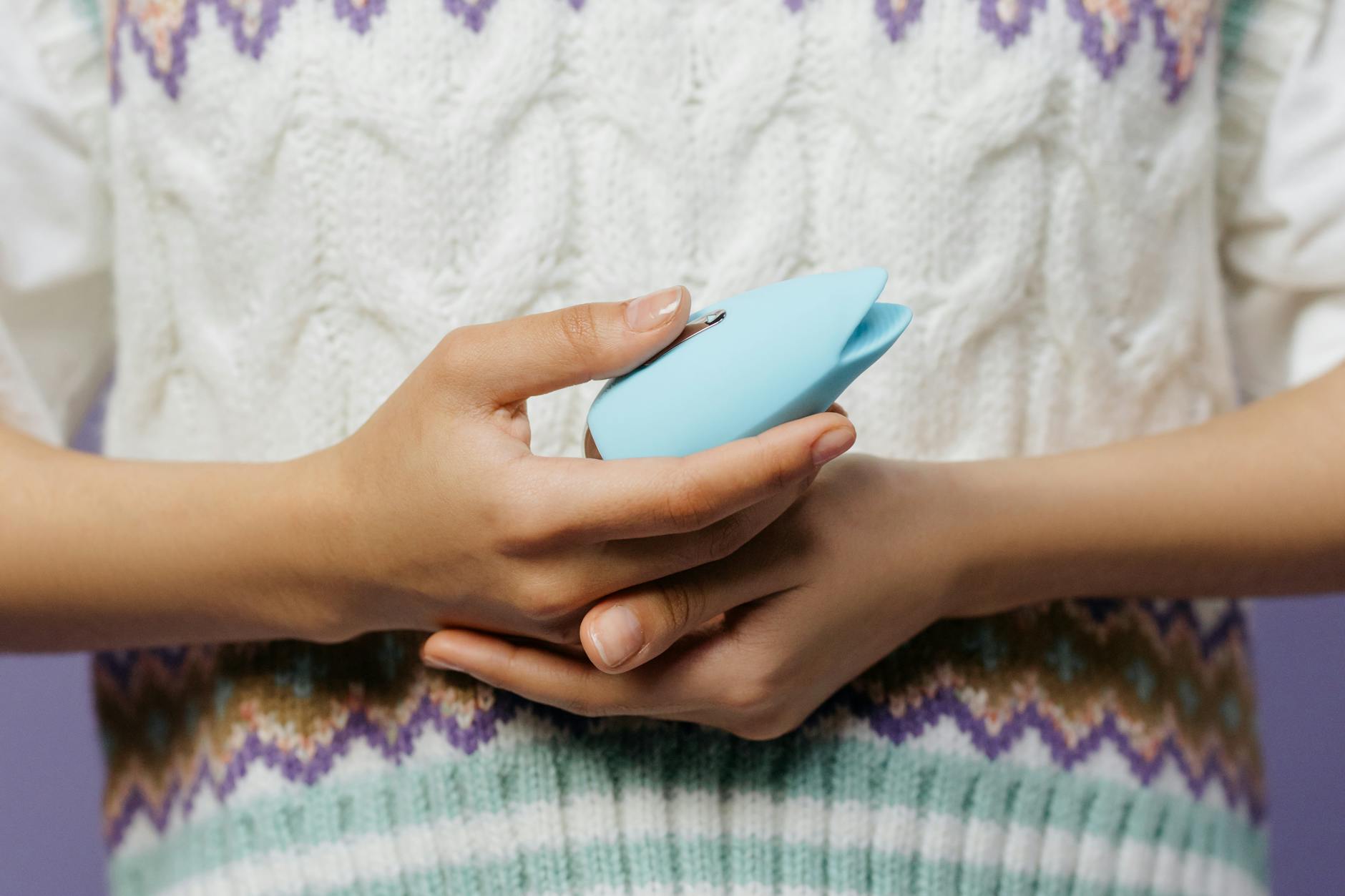
Photo by cottonbro studio on Pexels
The conversation you actually need to have
Most couples fumble this because they frame it as a big deal when it doesn't have to be. You don't need a state dinner conversation. You need a real one, and you can start it almost anywhere.
Here's what I tell my clients to try: "Hey, I want to make sure we're on the same page about something. I use my Lemon vibrator solo sometimes, and I want you to know that's happening. It's not about you or about us. It's just something I need for me. How do you feel about that?"
That's it. You're not asking permission. You're naming a boundary and inviting their feelings into it. There's a difference.
Their response might be "cool, that doesn't bother me at all." It might be "actually, I'd feel more comfortable if..." and then you negotiate. It might be "can I be in the room?" and suddenly you're having a conversation about whether that's what you want or not. But at least you're talking about the actual thing.
The trap is when one person says "I don't feel comfortable" and the other person hears "you can't do this." Those aren't the same. Discomfort is information, not a veto. Your partner can feel weird about solo pleasure happening nearby and you can still have your boundary. The work is figuring out how.
Practical boundaries that actually work
Once you've had the conversation, you probably need logistics. Here are the ones I see land best in practice:
Time and place boundaries. "I'm going to take twenty minutes in the bedroom with the door closed on Tuesday and Thursday nights." Specific beats vague every time. Your partner knows what to expect, you get predictable space, and nobody's surprised.
Notification boundaries. Some couples like "I'm going to do this now, is that okay?" Others prefer "I'll let you know afterward." Pick what feels true for you, not what sounds most considerate. Fake consideration kills real intimacy.
Presence boundaries. Some people are fine with a partner nearby, some need total privacy, some want their partner to know but not be in the house. All of those are legitimate. What matters is that you name it instead of assuming.
Shared-space boundaries. If you live together and can't always disappear, you might use a "do not disturb" signal. Closed door. Headphones. A text. Whatever works. The point is your partner gets one cue that means "I need solo time right now" without you having to spell it out every single time.
What to do if your partner gets weird about it
Sometimes someone will say they're fine with it and then behave otherwise. They get quiet when you mention it. They make a joke that lands wrong. They want to know exactly when and for how long. That's not actually fine.
When that happens, the conversation wasn't over yet. Dig in. "I notice you seem uncomfortable. What's that about?" Most of the time it's not actually about your Lemon vibrator at all. It's about fear of inadequacy, or control, or something in their past. Your job is not to fix it. Your job is to hear it.
Then you decide: Do I want to work with my partner on this? Do I want to reassure them? Or do I need to stick with my boundary and let them adjust? All three are valid. But you're making an active choice, not drowning in guilt.
When using a lemon clitoral vibrator solo actually deepens partnership
Here's what usually surprises people: when solo pleasure becomes open instead of hidden, couples often report better sex together, not worse. The shame lifts. The resentment evaporates. And suddenly there's less pressure on partnered sex to deliver everything you need.
That's not magic. That's just what happens when you stop asking your partnership to fill every need. When you take responsibility for your own pleasure with your Lemon clitoral vibrator or any other tool, your partner gets to be a partner again instead of a provider.
You also model something crucial: that self-care is not selfish. That your body and pleasure belong to you. That saying "I need solo time" is as legitimate as saying "I need alone time to work" or "I need a night with friends." Your partner sees that and it shifts how they think about their own needs too.
The difference between solo pleasure and emotional unavailability
I'll name the thing people worry about but rarely say: they're scared that if you're getting pleasure solo, you don't want them anymore. That's a real fear and it deserves a real answer, which is no, that's not how this works.
Using a lemon sucker or any vibrator on your own is not a referendum on your partnership. Solo pleasure is usually about physical release, novelty, or simply knowing your own body better. It's not a symptom of emotional distance, though it can feel that way if nobody's talking about it.
Where it becomes a problem is if solo pleasure replaces partnership connection. If you're using your Lemon vibrator every night and avoiding your partner entirely, that's worth examining. But solo pleasure once or twice a week while your partnership is otherwise connected? That's not a problem. That's health.
How to actually use your Lemon vibrator when your partner is nearby
Practically speaking, once you've set boundaries, here's what works.
First, choose a time when your partner has something else to do. Not because you need permission, but because it keeps the energy clear. You're not hiding, but you're also not making them awkwardly aware of every detail.
Second, know what you want before you start. Solo time is for you, which means you get to be selfish about the experience. You don't need to rush, perform, or consider someone else's timeline. That's the whole point.
Third, use lubrication if you're using a Lemon clitoral vibrator or any external toy. Your body's arousal response might be different when there's a partner somewhere in the house. More lubrication takes pressure off and makes the experience actually good instead of slightly anxious.
Fourth, actually enjoy it. The temptation when someone's nearby is to rush through it, to make it small and quick so nobody notices. But that defeats the purpose. If you've set a boundary, use the time fully.
Finally, when you're done, don't sneak back out trying to act normal. You don't need to announce it, but you also don't need to pretend nothing happened. Just rejoin your partner like a person who took a break. Because that's what you did.
People also ask
Is it normal to want solo pleasure time when you're in a committed relationship?
Completely normal. Solo pleasure, partnerships, and partnership sex are three separate things. You can have all three and they're not competing. In fact, people who feel good about their own pleasure usually have better partnered sex too, because they're not putting all that pressure on someone else to make them feel good. Using a Lemon vibrator solo or any other tool is as legitimate as having alone time to read or exercise.
What if my partner wants to watch when I use my Lemon clitoral vibrator?
That's a separate negotiation. Watching is not the same as participating, and participating is not the same as joining. You get to decide what you're comfortable with. Some people find it hot. Some find it violating. Some feel shy at first and then warm up to it. There's no right answer. The only rule is that you choose, not that your partner's desire for access overrides your comfort.
How do I bring up solo pleasure if we've never talked about it?
Start small and honest. "I've been using my vibrator solo and I want us to talk about it" is better than waiting for them to find out. Then listen to what they say without defending yourself. Their discomfort is information, not a reason to stop. You're building a conversation, not asking for a permission slip.
What if my partner says they feel hurt that I want solo pleasure time?
That's real and it's worth taking seriously, but it's not a reason to stop. Hurt usually means something underneath. Fear of inadequacy. Worry about connection. Old stuff about control or trust. Ask what's actually going on, then separate that from your boundary. You can be compassionate and still maintain the boundary. In fact, doing both is what builds real partnership.
Can solo pleasure with a Lemon vibrator strengthen my partnership?
Yes, when it's transparent and mutual respect is there. Solo pleasure isn't a threat to partnership when both people understand that pleasure is individual and partnership is separate. You might find that having clarity around solo pleasure actually deepens intimacy because you're not hiding, resentful, or carrying shame. Try framing it as self-care that benefits both of you, because it does.
How often should I be using my Lemon vibrator solo?
As often as you want. Once a week. Three times a week. Once a month. There's no threshold where it suddenly becomes a problem unless it's replacing partnered connection entirely or it's a sign of something else going on emotionally. Most people I work with find that once they stop feeling guilty about it, the frequency settles into whatever actually feels good for them. And that frequency often varies.
The real thing
Using your Lemon clitoral vibrator or any adult toy for solo pleasure while in a partnership isn't selfish. It's not a sign something's wrong. It's not a threat to your relationship. It's you knowing what you need and taking responsibility for it instead of waiting for someone else to provide it.
That's actually the foundation of good partnership. When both people can say "my pleasure is my responsibility" and "your pleasure is yours," suddenly there's way less pressure and way more actual intimacy.
Start with honest conversation. Set clear boundaries. Use your Lemon vibrator without shame. And watch what happens when both of you stop pretending that you're supposed to need exactly the same thing at exactly the same time.
Your pleasure matters. Solo or partnered. And naming that openly is where it gets actually good.