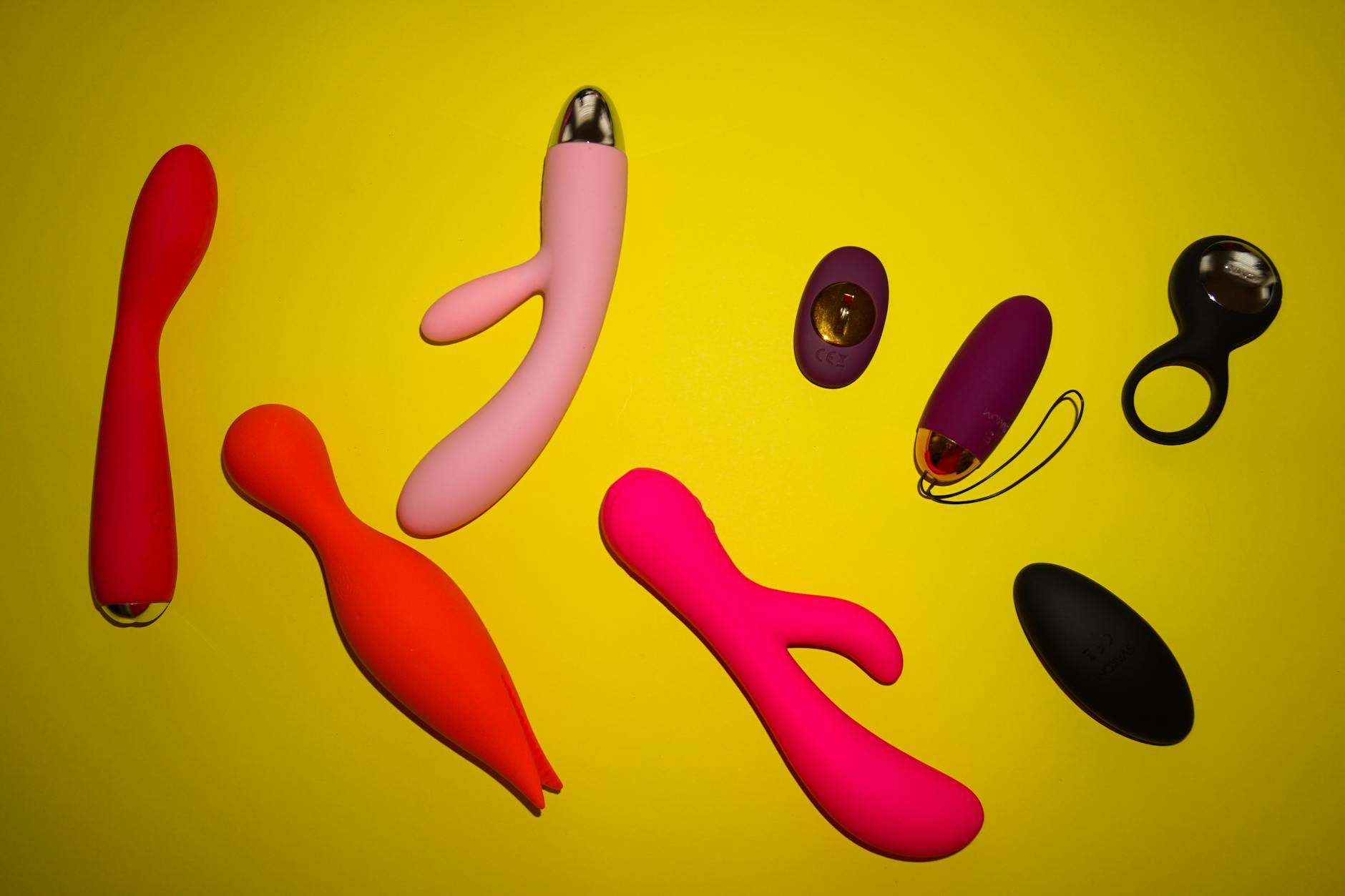
Here's what nobody tells you about pacing
When someone reaches climax quickly during partnered sex, the instinct is to frame it as a problem to solve alone. You try breathing exercises, Kegel contractions, longer foreplay. Those help, sure. But here's the real plot twist: the fastest way to extend an encounter isn't always about holding back. It's about redirecting the energy.
A Lemon vibrator doesn't fix premature timing by itself. It fixes the entire structure of what partnered sex can be. Once you stop treating your partner's pleasure as a bonus round and start building it into the main event, the clock stops mattering.
Why speed happens in the first place
Quick arousal and climax patterns aren't random. They're often wired in.
Some bodies are naturally tuned to respond fast. Others have learned, over years or decades, that sex needs to be efficient. Anxiety about performance can also compress the timeline. And honestly, sometimes it's just how the nervous system is calibrated. None of that makes you broken.
But here's what most partners don't realize: your body isn't the bottleneck. The structure of what you're doing is.
If penetration is the opening act and the only real event, then yes, quick climax becomes a problem. But if penetration is one element in a longer, more varied encounter, speed becomes almost irrelevant. The Lemon clitoral vibrator is what makes that shift possible.
The framework that actually works
Think of partnered sex in three phases instead of two:
Phase one: External focus. You or your partner use the Lemon vibrator on them. Not as foreplay. As the main course. This typically takes 15-25 minutes depending on sensitivity and arousal state. You're not racing to penetration. You're building genuine, unhurried pleasure. Meanwhile, you're getting to watch and participate without the pressure of being the sole source of stimulation. Your nervous system gets to calm down.
Phase two: Shared transition. Your partner might be near or past the edge of climax. This is where a lot of couples panic and rush. Instead, slow down. Stay close. Use the Lemon on lower intensity, or switch to hands, or just lie together. You're transitioning without collapsing the entire experience. If your partner has already climaxed, that's not the end. It's intermission.
Phase three: Your pleasure (or mutual pleasure). Now penetration or whatever you both want can unfold without the same time pressure. Your partner has already experienced deep pleasure. You're not trying to time-manage two different nervous systems simultaneously. The frame has shifted from "both reach climax together" to "we each get what we need, with genuine presence."
Practical setup that changes everything
Here's what to actually do, step by step:
Start in a position where you can see each other. Side-by-side, face-to-face if possible. Hand your partner the Lemon vibrator and let them guide it themselves at first. Watch. Breathe. Pay attention to what happens in their body, not the clock.
The Lemon's design means they can control intensity with precision. Start at pattern one or two. Most people get traction from the lower settings, which is the opposite of what many assume. You're building sensation, not overwhelming it.
Your role here isn't passive. You're present. You can touch them elsewhere. Kiss their neck or shoulders. Use your hands on their inner thighs or breasts. Speak. Ask what feels good. The point is that you're engaged in their pleasure, not checking out or feeling anxious about timing.
After about 10-15 minutes, you might notice their breathing change, their body tense slightly. They might ask you to slow down or keep going. Listen. This is genuine communication happening in real time, which almost never occurs when you're focused on penetration.
If they climax, celebrate it. Literally. Stay close. Then take a breath. Ask what they want next. Sometimes they'll want penetration immediately after. Sometimes they want to rest and touch you. Sometimes they want to build again slowly. Your job is to follow their lead and notice that none of this has to happen in a specific order.
Why this reframes the pressure entirely
When you've spent 15-20 minutes genuinely focused on your partner's pleasure using a Lemon clitoral vibrator, a few things happen to your nervous system:
First, your arousal often actually increases. You're not sitting in your own head spiraling about performance. You're engaged, watching, participating. Second, you've proven that pleasure isn't a sprint. Third, your partner has received what they actually want, which almost always reduces the pressure they're inadvertently putting on you.
This matters because performance anxiety is contagious. When your partner feels like they have to time their arousal perfectly to match yours, they tense up. When you feel like you have to last forever, you tense up. A Lemon vibrator breaks that feedback loop by making their pleasure independent of your timing.
When to bring this up (and how)
If you're still in the early phase of knowing your partner, don't lead with "I want to use a vibrator so I can last longer." That's not false exactly, but it centers your anxiety instead of shared pleasure.
Instead: "I've been thinking about ways to make sex feel less rushed and more interesting for both of us. I came across the Lemon vibrator. It looks really well-designed. Would you want to try it together?"
That's honest and genuinely focused on what you're proposing: a new structure, not a fix for you alone.
If you're in a longer relationship and this is a familiar conversation, you might say: "I want to try something different. What if we spent more time on your pleasure first, using the Lemon, and let that shift how the whole thing unfolds?" The frame is about exploration, not correction.
The unexpected benefit: real communication
Here's what happens when you're not racing: you actually have to talk. Your partner has to tell you what feels good. You have to ask. There's no way to hide in silence.
This is genuinely the part that changes relationships most. Not the vibrator itself. The fact that you're suddenly having direct conversations about pleasure instead of performing predetermined scripts.
Many couples who introduce a Lemon clitoral vibrator report that sex becomes less efficient but infinitely more connected. The clock stops being the enemy because you've stopped racing against it.
The timing myth, debunked
Here's what I wish someone had told me early on: lasting longer isn't about willpower or delay sprays or breathing techniques. Well, it's partly that. But mostly it's about reframing what sex is supposed to accomplish.
If the goal is "both people climax around the same time through penetration," then yes, quick arousal is a problem. But that's an arbitrary goal. It's not the only way sex works, and for most couples, it's not actually the way that feels best.
If the goal is "both people experience genuine pleasure and connection over a span of time," then a Lemon vibrator, patience, and real communication become the tools. Speed becomes irrelevant. Your partner's pleasure becomes the rhythm keeper instead of your nervousness.
People also ask
Q: Will using a vibrator make my partner dependent on it?
No. If anything, the opposite happens. Once your partner knows they can reliably reach climax using a Lemon vibrator, they're less anxious about sex overall. That usually translates to better pleasure during other activities too. The Lemon becomes a tool you choose to use sometimes, not a crutch.
Q: What if my partner reaches climax while using the Lemon, then I'm not sure what to do next?
That's the best problem to have. Ask them. "What do you want now?" It might be rest, penetration, more vibration, or just closeness. There's no script. That absence of script is where real connection happens.
Q: Does this work for people with penises too?
The Lemon is designed for clitoral pleasure specifically, but yes, many couples use it as part of their shared experience. One partner experiences pleasure from the Lemon while the other is present and engaged, then they shift into whatever works for both bodies. The principle is the same regardless of anatomy: build your partner's pleasure independently first, then let the rest unfold.
Q: How long should I expect the first time to take?
Typically 20-30 minutes from start to finish if you're building real pleasure rather than rushing. That might feel long if you're used to faster encounters. It's worth trying at least once to feel the difference.
Q: My partner is self-conscious about being "too loud" or "taking too long" with a vibrator. How do I help?
This goes back to communication. Let them know that their pleasure is the point. That sounds like a cliché until you actually mean it in real time, and that requires slowing down enough to show them you do. Reassurance helps, but presence helps more.
Q: Is there a best position for using a Lemon vibrator together?
Side-by-side lying down is often easiest because both people can stay close and make eye contact. But you can also try sitting up together, your partner leaning back into you, or any variation where you can see each other and touch. Experiment. There's no wrong answer.
The actual shift
When you stop racing and start building, sex stops being a performance where you're trying not to disappoint. It becomes something you're actually present for. A Lemon clitoral vibrator makes that shift concrete because it physically removes the pressure from penetration timing and redirects it toward genuine shared pleasure.
Your partner's pleasure isn't a bonus. It's the main event. Once you redesign sex with that understanding, lasting longer stops being something you have to force and starts being something that naturally unfolds. If you're curious about how this might work in your relationship, reach out to us. We're here to help you build what actually feels good.