
Let's talk about the relationship conversation you've been avoiding
Most couples don't introduce toys into their sex life because they're waiting for the perfect moment. That moment never comes. What comes instead is either years of unspoken desire or a clumsy late-night text that neither of you ever mentions again. Here's the thing: introducing a lemon clitoral vibrator into your intimate life isn't really about the vibrator. It's about permission.
Permission to want something different. Permission to ask for it. Permission to explore together without shame. Those conversations are harder than the physical part, which is why most couples skip them entirely. But they're also the conversations that actually rebuild intimacy.
Why this matters for your relationship right now
Years into a partnership, physical connection often calcifies into routine. Not because partners stop caring, but because vulnerability around desire feels riskier the longer you've been together. You've built a rhythm. Disrupting it feels dangerous. But here's what the research actually shows: couples who introduce new elements into their sex life report higher satisfaction not just sexually, but emotionally and relationally. The novelty itself isn't the point. The conversation that precedes it is.
Introducing a lemon vibrator specifically (rather than, say, a generic vibrator) creates a moment to pause and reset. It signals intention. It says: I'm thinking about this. I want us to think about this together.
The conversation before the toy
If you're thinking about bringing a clitoral vibrator into your relationship, start here, not at the product page.
Frame it as curiosity, not criticism. "I've been reading about how people use toys to deepen pleasure, and I'm curious what you think" lands completely differently than "I think we need to spice things up" (which sounds like you're bored). One opens a conversation. The other triggers a defense.
Be specific about what you want. "I'd like to explore using a lemon clitoral vibrator together" is clearer than "Maybe we should try something new someday." Specificity reduces anxiety because it removes ambiguity.
Make it safe to say no. This is critical. If your partner feels pressured, any eventual yes will come with resentment attached. You might say: "I'm genuinely interested in this. But if you're not, we don't do it. I need to know what you actually think, not what you think I want to hear."
Listen without fixing. If they express hesitation, resist the urge to convince them. Just hear them. "That makes sense" or "Tell me more" are enough. Defensiveness kills intimacy faster than anything else.
How a lemon vibrator actually changes the dynamic
Unlike vibrators with a more generic shape, air-suction devices like a lemon clitoral vibrator create a different kind of sensation that can feel less intimidating to introduce as a couple. The sensation is focused but gentle enough that it doesn't feel abrupt. For many couples, this is actually the sweet spot between novelty and comfort.
When you're using a lemon vibrator together, you're also physically closer. You're not handing off a toy and stepping back. One partner is typically guiding it, adjusting pressure, watching their partner's face. That proximity, that attention, is where the real intimacy lives. The toy is just the vehicle.
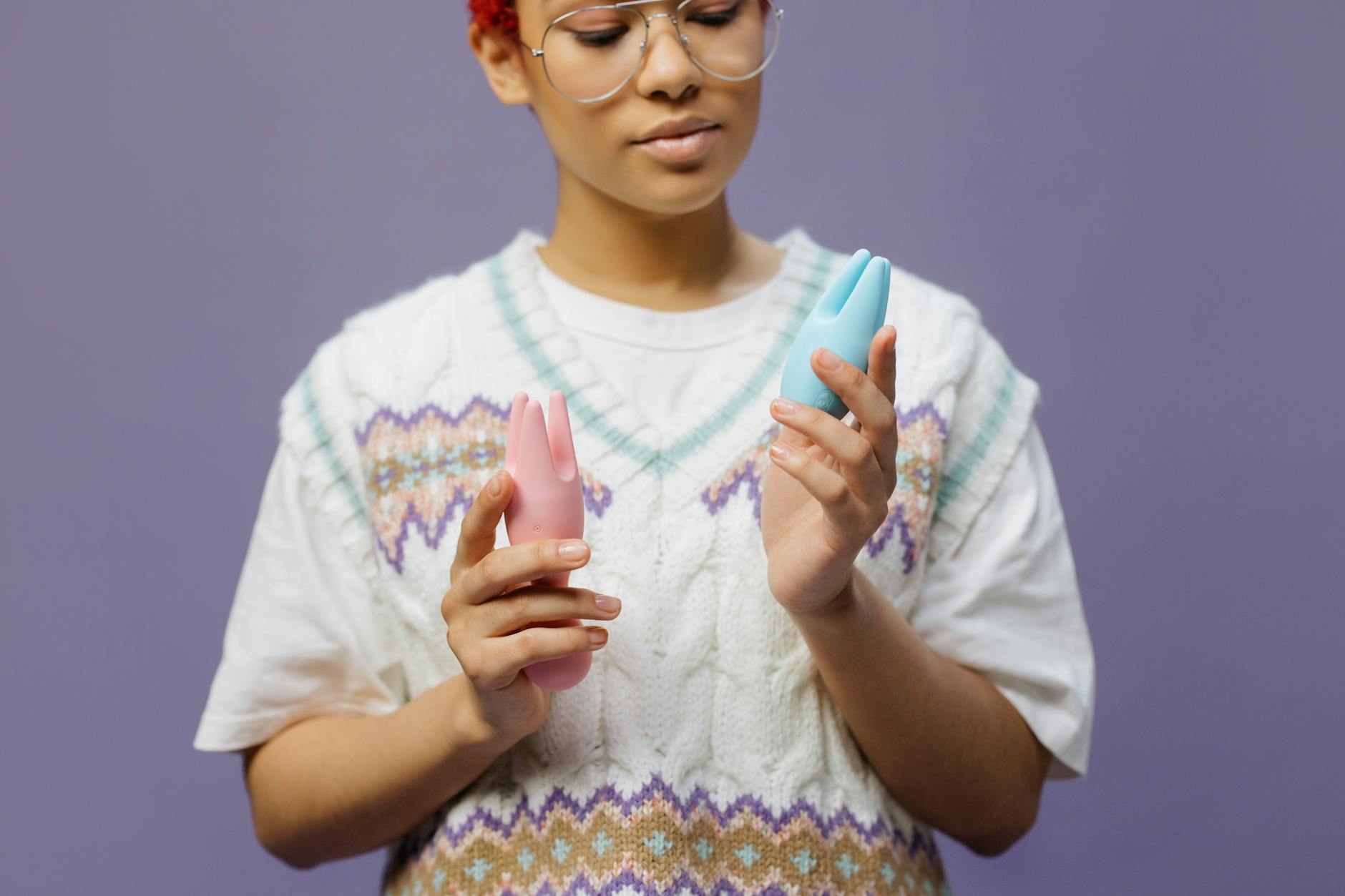
Photo by cottonbro studio on Pexels
Building trust around pleasure
One of the biggest shifts I see in couples who introduce toys successfully is a fundamental renegotiation of trust. For years, maybe decades, they've been making assumptions about what their partner wants, what they're comfortable with, what they find attractive. None of those assumptions were tested. And that untested territory became the place where shame lived.
When you actually ask, and you listen, and you try something new together, you're demolishing that shame. You're saying: I don't know everything about you. I'm willing to find out. I find your pleasure important enough to be curious.
This reframes vulnerability as strength rather than weakness. Your partner isn't vulnerable because they need a toy. They're vulnerable because they're being honest with you.
The practical setup that works
Timing matters. Not "midnight on Tuesday," but rather: choose a time when you're both rested and unrushed. Stress kills arousal. Fatigue kills everything. If you're going to have a first experience with a lemon clitoral vibrator as a couple, make it matter by creating actual space for it.
Start with clear expectations. "We're going to try this and see how it feels. If it's weird, we stop. If it's great, we keep going. No judgment either way." Lower stakes mean you can actually be present instead of anxious.
Lubricant is non-negotiable. Water-based lube works best with silicone toys, and it also signals that you're taking care of your partner's comfort. That message, however small, accumulates over time.
What happens after
The conversation after matters as much as the conversation before. Not a formal debriefing, but genuine check-in. "What did you think?" and then actually listening. Some couples find they loved it and want to explore more. Others find it was interesting but not their thing, and that's completely fine. Either answer is data that helps you understand each other better.
If you did enjoy using a lemon vibrator together, you've also now opened a door. Future conversations about pleasure become easier because you've already had one. You've already survived the vulnerability.
When to bring in more conversation
If introducing a lemon clitoral vibrator surfaces deeper issues (resentment, avoidance, disconnection that goes beyond sex), that's information. It's not a sign you've done something wrong. It's a sign that couples counseling might be genuinely useful. I see this frequently: couples introduce a toy, it goes well physically, but it highlights emotional distance they hadn't fully acknowledged. That's actually a gift, even if it doesn't feel like one immediately. You now know what needs work.
For most couples, though, this is simpler. You're just trying to reconnect. You're trying to remember that desire still lives in the relationship. You're trying to have fun together. A lemon vibrator can be the permission structure that makes all of that possible.
FAQ: Common questions about toys and couples
What if my partner is hesitant about using toys together?
Hesitation is normal. Toys can feel threatening because they activate old stories about inadequacy. Start by separating the two conversations. "I want to try this for me, and I'd love to share the experience with you" is different from "I need this to be satisfied." You might also offer to read about it together, or to watch educational content. Shared knowledge reduces anxiety.
How do I know if a lemon clitoral vibrator is right for couples, or if we need something else?
Lemon vibrators are particularly good for couples because they don't require a lot of technical skill, they're versatile (one partner can use it on the other, or it can be used during partnered sex), and the sensation is subtle enough that it feels more like enhancement than replacement. But honestly, the specific toy matters less than the conversation. Start with what feels accessible.
Can we use a lemon vibrator during sex with a partner?
Absolutely. Many couples find that air-suction devices like the Lem work beautifully during penetrative sex because they stimulate the clitoris without interfering with what's happening internally. It changes the entire sensation profile. Some partners hold it, some partners guide their partner's hand. There's no script.
What if we try it and it doesn't work?
That's completely fine. Not every tool works for every person or every couple. The win isn't the toy. The win is that you tried something together, you communicated about desire, and you deepened your knowledge of each other. Those wins stick around even if the vibrator ends up in a drawer.
How do I bring this up without seeming like I'm unsatisfied?
Frame it around curiosity and desire, not lack. "I've been thinking about how we could explore deeper sensations together" is different from "Our sex life is boring." One is about expansion. The other is about criticism. You also might share an article or resource without making it about the immediate future. Sometimes people need time to sit with an idea before they're ready to try it.
Is it weird to use a lemon vibrator with a long-term partner?
The only thing that's weird is the silence around it. Couples who've been together for years often assume they know everything about their partner's preferences. They don't. And that assumption, multiplied across decades, creates a lot of disconnection. Trying new things together isn't weird. It's honest. It's saying: I don't have all the answers, and I'm genuinely interested in yours.
The real intimacy lives in the conversation
Introducing a lemon clitoral vibrator into your relationship isn't a shortcut to intimacy. But it can be a doorway. The real work, the stuff that actually rebuilds connection, happens in the vulnerability of asking for what you want and listening to what your partner wants in return. The toy is just the thing you're both looking at while you have that conversation. And sometimes, that's exactly what you need.
If you're ready to start that conversation, but you're not sure how, consider reaching out. Connection is worth the awkwardness.
Resources and References
- Fisher, H. E., et al. (2010). "Defining the broad spectrum of biological sex." Proceedings of the National Academy of Sciences, 112(50), 15468-15473.
- Meston, C. M., & Frohlich, P. F. (2000). "The neurobiology of sexual function." Archives of General Psychiatry, 57(11), 1012-1030.
- Gottman, J. M. (1994). What Predicts Divorce? The Relationship Between Marital Processes and Marital Outcomes. Lawrence Erlbaum Associates.
- Hello Nancy. (2024). How to Use Lemon Vibrators with a Partner.
- Hello Nancy. (2024). Why Lemon Vibrators Feel Different During Different Life Stages.