
Here's what nobody tells you about the first time
You're going to feel self-conscious. Not because there's anything wrong with wanting pleasure, but because you've probably spent years receiving the message that your own hands should be enough, or that asking for help (or using a tool) somehow makes you needy or broken. Neither is true. A Lemon vibrator is not a sign of failure. It's a precision instrument designed by people who understand anatomy.
The intimidation isn't really about the toy. It's about permission.
Why your brain is holding you back (and it's not what you think)
When I work with couples navigating this transition, the resistance usually breaks down into three categories. First, there's the performance anxiety: "What if I don't orgasm? What if it takes too long? What if my partner judges me?" Second is the identity piece: "I'm not the kind of person who needs this." Third is logistical: "Where do I even start?"
What they all have in common is that none of them are actually about the toy. They're about the story you've been telling yourself about what your pleasure should look like. And here's the plot twist: you get to rewrite that story anytime you want.
The first time setup matters more than you'd expect
Don't do this:
Try to use a clitoral vibrator for the first time when you're in a rush, stressed, or when you only have ten minutes. Don't do it when your partner is watching expectantly. Don't do it when you're already frustrated because previous attempts didn't work. Don't do it while also mentally scrolling through your to-do list.
Do this instead:
Set aside 30 to 45 minutes when nobody needs anything from you. Lock the door if you live with other people. Put your phone in another room. If you're with a partner, have a conversation about it beforehand. Not during. Before. Say something like, "I want to try using a vibrator, and I'd like your support, but I need you to understand that this might feel awkward the first time, and that's okay."
The goal of your first session is not orgasm. It's familiarity. You're learning what the toy feels like, how loud it is, what your body's actual response is versus what you thought it would be.
What happens the first time (spoiler: it's less dramatic than you think)
When you hold a Lemon vibrator for the first time, you might be surprised by how light it feels. You might expect it to be louder than it is. You might be astonished at how quickly you feel something, or you might feel almost nothing on your first attempt, which is completely normal.
Here's why that happens: your body needs time to warm up and your nervous system needs to settle. The first-time jitters literally reduce blood flow to the area where a vibrator works best. Anxiety is the opposite of arousal. So if you're white-knuckling through the experience, waiting for results, you're working against yourself.
Start at the lowest setting. This matters. Many people assume they need the intense patterns right away. You don't. The gentle patterns give you time to understand what's happening without overstimulation. Spend 10 to 15 minutes on pattern 1 or 2. Your body will tell you when it's ready to move up.
The role of your partner (if you have one)
If someone else is in the room, their energy matters enormously. A partner who is genuinely curious, respectful, and willing to leave the room if you ask is a partner who's creating psychological safety. A partner who is impatient, judgmental, or sees the vibrator as competition is creating the opposite.
You don't need your partner's permission to explore your own body. But their support makes it easier. If you're in a relationship and your partner is hesitant about you using a lemon clitoral vibrator, that's a separate conversation worth having. Some partners worry it will replace them or make them feel inadequate. The truth is simpler: a vibrator is not a person. It can't create emotional intimacy or hold you. What it can do is help you understand your own pleasure, which actually improves sex with a partner because you know what you like.
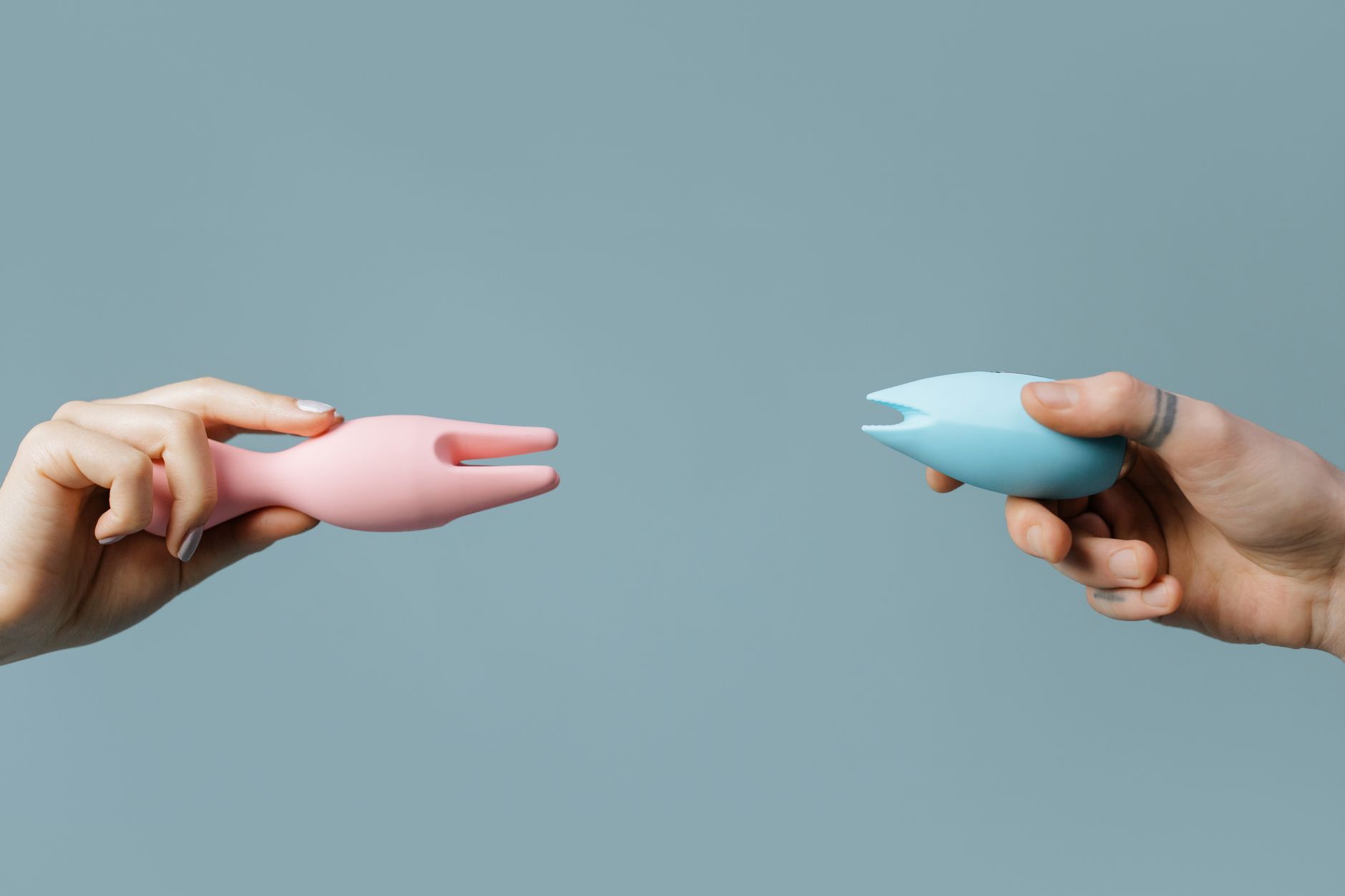
Photo by cottonbro studio on Pexels
Common first-time hiccups (and why they're not failures)
You feel nothing. This usually means one of three things: you're not aroused enough yet, the angle is wrong, or you're in your head. Solution? Stop. Spend 10 minutes just thinking about something that turns you on. Fantasize. Read erotica. Whatever works. Then try again. Angle matters too. The clitoral head of a Lemon vibrator works best when it's making direct contact, not hovering or pressing sideways.
It feels too intense. You might be on too high a setting, or you might be sensitive. Both are fine. Drop to pattern 1 and stay there longer. Your body can build tolerance and range over time.
You don't orgasm. Okay, but did you feel anything good? That's still a win. Orgasm isn't the only marker of pleasure. Some people are more interested in the buildup, or the sensation, or just the permission to take 30 minutes for themselves. If orgasm matters to you, that's valid too. It often takes multiple sessions before your body feels comfortable enough to go there. Patience is not passivity. It's practice.
Why solo exploration comes before partnered use
If this is genuinely your first time using any clitoral vibrator, start alone. Not because there's anything wrong with exploring with a partner, but because your first experience teaches you about your own body without the additional variable of someone else's presence or preferences. When you understand what feels good to you in isolation, you can communicate that clearly later.
Many people skip this step and then feel like the vibrator didn't work because they were too self-conscious. That's a setup failure, not a toy failure. You're allowed to be selfish about your own pleasure. In fact, you should be.
The conversation with your partner (if you're moving to that phase)
Once you've used your Lemon vibrator solo and you know roughly what you like, the conversation with your partner shifts. Instead of "I want to try a vibrator," it becomes "I found that I like this pattern and this angle. I'd like to explore that together." That's specific. That's inviting partnership. That's very different from asking permission or apologizing for your body.
Some partners want to use the vibrator on you. Some want you to use it while they're inside you. Some want to use it on themselves while you're there. All of that is negotiable. The key is that you've already done the solo work, so you're not discovering yourself for the first time in front of them.
Practical things nobody mentions
Charge your Lemon vibrator before you need it, not the night of. Keep it clean before the first use. Use a water-based lubricant if you want more sensation (silicone lube works too, but clean more carefully afterward). Have tissues nearby. You don't need a ton of lube for clitoral work like you might for penetration, but a little goes a long way in making the sensation feel slippery rather than sticky.
Starting with external clitoral stimulation only is the gentlest entry point. There's zero pressure to add penetration or internal stimulation on day one. Some people never want to mix them. Both are completely normal.
Why the second time is easier than the first
Your nervous system remembers that it survived. You'll have less anticipatory anxiety. You'll know what to expect sonically and physically. You might discover that you want a different pattern or angle. That's growth, not failure. You're not supposed to figure out your perfect setup in one session. You're supposed to have conversations with your body across time.
If you had a weird first experience and you're considering trying again, absolutely do. The first time carries a lot of psychological baggage. The second time is just you and a toy and whatever actually feels good.
People also ask
Is it normal to feel self-conscious using a Lemon vibrator the first time?
Completely. You're doing something new, potentially something you've been told isn't necessary or is somehow shameful. Your brain is working overtime to protect you from judgment, even if you're alone. That self-consciousness usually softens after the first or second session because you realize nothing bad happened. You didn't break anything. Nobody found out. You just felt something good. Normalcy sets in quickly.
How long should my first session with a clitoral vibrator last?
There's no rule, but 30 to 45 minutes is ideal because it removes the pressure to perform or hurry. You've got time to warm up, explore different patterns, maybe feel some pleasure, and then stop without feeling like you failed. If you only have 20 minutes and that's genuinely all the privacy you can get, take it. Something is better than nothing. But whenever possible, give yourself breathing room.
What if my partner wants to watch my first time using a Lemon vibrator?
That's your call. Some people find it hot and supportive. Others find it distracting or pressurizing. You don't owe your partner access to every moment of your sexuality. "I'd like to explore this alone first, and then we can figure out what we both want to try together" is a complete sentence. If your partner pushes back on that boundary, that's information about your dynamic worth examining.
Can I use a Lemon vibrator if I've never had an orgasm?
Yes. In fact, many people discover orgasm for the first time with clitoral stimulation from a vibrator because the sensation is consistent and focused in a way manual stimulation isn't. There's zero guarantee it will happen immediately, but the odds are higher than without any tool. Patience and curiosity matter more than anxiety.
What's the difference between using a Lemon vibrator alone versus with a partner?
Solo, it's pure exploration. You're learning your body. You're not worried about performance or rhythm or whether someone else is enjoying themselves. With a partner, there's an added dimension of intimacy and communication, but also additional variables to manage. Most people find it easier to learn alone first, then invite partnership later.
If I can't orgasm with a Lemon vibrator, does that mean something is wrong with my body?
No. Orgasm is influenced by stress, medication, relationship dynamics, previous trauma, baseline neurochemistry, and sometimes just the wrong moment. A vibrator improves your odds, but it's not a magic fix. If you've tried multiple times in relaxed, pressure-free settings and still nothing, that's worth discussing with a healthcare provider, not evidence that you're broken. Many factors are treatable or manageable with the right support.
The actual bottom line
Your first time using a clitoral vibrator is probably going to feel weird, maybe awkward, possibly disappointing. That's normal. Second and third times are typically easier because you've removed the novelty and the uncertainty. By the fourth or fifth time, you might actually enjoy yourself, which is the whole point. Permission isn't something your partner or your therapist gives you. It's something you give yourself, usually in small increments. Start small. Stay curious. Your pleasure matters, and exploring it with a Lemon vibrator is a perfectly reasonable way to prioritize that.
If you have questions about what works for your body or your relationship, we're here. Reach out anytime.
Related reading
If first-time jitters aren't your only barrier, you might find these helpful:
How to Use a Lemon Vibrator When Anxiety Blocks Arousal tackles the specific challenge of nervous system activation.
How to Use a Lemon Vibrator When You Feel Pressure to Orgasm With Your Partner walks through the performance anxiety conversation.
How to Use a Lemon Vibrator When Your Partner Wants to Explore Together covers the conversation side of things if you're further along.